Thursday, May 22, 2014

The Pukwudgie

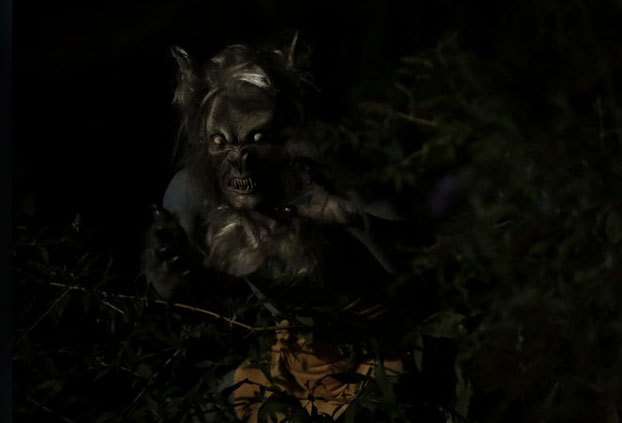
In cultures all over the world, there are tales of short, humanlike creatures that are either very helpful or very dangerous to humans. They are known by a number of names: gnomes, dwarves, trolls, elves, imps, goblins, and so on. And yet despite the fact that most of the world's cultures are separated by oceans, they all seem to share similar traits. They are small in stature, have humanlike bodies, possess a number of supernatural powers, and tend to be beneficial, mischievous, or even downright malicious in regards to how they interact with humans. In the folklore of the Wampanoag Indians in Massachusetts, one such little creature is the Pukwudgie, a demonic troll that is greatly feared by Native Americans and white men alike.

In general, the Pukwudgie (which means "little man of the wilderness") is described as being two to three feet in height (some say as tall as four feet) and looks somewhat human, but the creature's physical features are somewhat exaggerated. The creature's body is covered with thick hair, having an oversized nose (which is said to look like a dog's sometimes), big pointed ears, and an oversized mouth filled with sharp, jagged teeth. This little monster is said to have smooth skin that is either bluish-gray or ashen in color, and it has long fingers that are tipped with sharp talons. It is said to have a sweet odor and is usually associated with flowers. The creature is sometimes said to wear clothes which it has made from natural materials like grasses, tree bark, leaves, reeds, tree limbs, and sometimes fur. This gives the Pukwudgie the ability to camouflage itself, enabling the creature to easily blend in with its forest surroundings. Sometimes the little troll is described as being able to glow in the dark, but this may have more to do with the Pukwudgie's magical powers than anything else.

According to Wampanoag legend, the Pukwudgie is said to possess a number of supernatural powers. Despite its diminutive stature, the Pukwudgie has a supernatural degree of strength, and thus can overpower a fully-grown man rather easily. Furthermore, this creature is able to appear and disappear at will, can emit flashes of light from its body, is able to call forth the forces of magic, and can summon and control fire. In addition, the Pukwudgie is thought to be capable of shapeshifting. Some tales say that the little troll can take the form of a porcupine that walks on its hind legs, while other accounts tell of this creature taking the shape of a dog, a bird, an insect, or a cougar. However, the creature may not be limited to these forms. The monster is also said to be able to confuse the minds of humans, can entice them with the sound of its voice alone, and it has the power to cause harm to people simply by staring at them, similar to the European belief in the Evil Eye. But what perhaps is most disturbing is that the Pukwudgie is said to be able to control the souls of the people who have fallen victim to the creature's enticements and died as a result. The monster then turns these souls through its magic into balls of light, which are known to the Wampanoag as "Tei-Pai-Wankas". These spirit lights are essentially the same type of phenomenon as the will o'the wisp, and the Pukwudgie uses them to lure innocent victims to their doom. Somehow, these lights are able to compel people to follow them, making them disregard their own personal safety in the process. This hypnotic effect causes the people to pursue the lights wherever they may lead, whether it's into the middle of a swamp, a pool of quicksand, or even straight off of a cliff. The lights may even take the enthralled person right back to the Pukwudgie itself! But regardless of how the troll gets ahold of its prey, it's still a nasty way to go.

Although the creature's powers are formidable, the Pukwudgie is known to use weapons to hunt and kill its prey as well. The little troll is known to use small knives (possibly made of bone or flint), pointed sticks, and bows that fire magic or poisoned arrows. The Pukwudgie is also fond of throwing a type of poison dust at its victims, and will even toss sand into the eyes of its prey. Additionally, it should be mentioned that the legends are rather vague as to what the Pukwudgie and its kin do after they have killed their prey. It wouldn't be unreasonable to assume that the Pukwudgies devour the flesh of their kills and store away the souls of their hapless victims for later use in their insidious "Tei-Pai-Wankas".

According to Loren Coleman's excellent book Mysterious America (Paraview Pocket Books, 2007), the Pukwudgie is said to inhabit the dismal Hockomock Swamp, which in itself is a part of the fabled Bridgewater Triangle in southeastern Massachusetts. This area is notorious for anomalous phenomena and strange occurrences, and is also known to be home to a variety of monsters, including Sasquatch, Thunderbirds, giant snakes, black panthers, phantom black dogs and, of course, Pukwudgies. This area, consisting primarily of dense swamplands, covers approximately two hundred square miles, with the towns of Rehoboth, Abington, and Freetown forming the points of the Triangle. On the inside of the Bridgewater Triangle are the towns of Raynham, Norton, the Bridgewaters, Mansfield, Taunton, Easton, and Brockton. The Native American tribes of the area have long viewed the Hockomock Swamp as being a sacred place, but they also see it as being dangerous and even evil at times. Several Native American burials have been discovered within the confines of the Triangle, which really isn't surprising considering that this area of the Bay State in all likelihood has the highest density of prehistoric sites in all of New England (Coleman 2007, 33-39). Given the area's history of high strangeness and Native American inhabitation, it really doesn't come as any surprise that the Pukwudgies choose to dwell within the confines of the Bridgewater Triangle and the Hockomock Swamp.

Although most modern-day encounters with the Pukwudgie take place in Massachusetts, stories and accounts of the little troll have also come from Maine, Rhode Island, New Hampshire, and most interestingly, Indiana. According to Loren Coleman's newest book Monsters of Massachusetts: Mysterious Creatures in the Bay State (Stackpole Books, 2013), most of the activity has occurred in the area of Mounds State Park in Anderson, which is located in the central part of Indiana (Coleman 2013, 64). The park itself contains ten ceremonial burial mounds, which may have been used for burying the dead (artifacts excavated from the mounds seem to confirm this). They were built by the prehistoric Adena culture, and the surrounding area was used by the later Hopewell Indians. It would seem that any area that was once (or still is) inhabited by Native American tribes is quite likely to be home to the Pukwudgies as well.

According to Wampanoag legend and Christopher Balzano's article Pukwudgies: Myth or Monster?, the Pukwudgie wasn't always a vicious little monster. At one time, the little trolls were friends of humanity and would try to help people whenever they could. The only problem was that whenever they made any effort to help, it would backfire and become a huge catastrophe. The god-giant Maushop stepped in several times to clean up after the Pukwudgies. Maushop was beloved and revered by the Wampanoag as a hero and a creator (he was credited with having created most of Cape Cod, after all), while the Pukwudgies themselves grew jealous of the native people's love for the giant and began to despise him. Eventually, the diminutive trolls became so frustrated that they decided that, if they couldn't help the Native Americans, they would make their lives miserable instead. They became mischievous, and gradually aggravated the tribes enough that the people went to Maushop's wife Squanit (sometimes called Quant) to complain. Squanit then went to Maushop and demanded that he do something about the tiny tricksters. The giant complied and began to gather up all of the Pukwudgies and put them into a leather bag. He shook the bag both violently and vigorously, until the trolls were thoroughly dazed and confused. Then, Maushop threw the Pukwudgies as far away as he could, scattering them all across New England. Satisfied with his work, Maushop went away to rest for awhile.

Unbeknownst to Maushop and his wife, the Pukwudgies were not so weak that they could be thrown away like so much garbage. Although many of them had died, some of these creatures had survived. Regaining their senses, they were now incredibly angry and vengeful because of the harsh treatment they had received and the deaths of their people at the god-giant's enormous hands. Hungry for revenge, the surviving Pukwudgies began making their way back to Massachusetts. Blood spilled demanded that the blood be repaid, and now there was hell to pay...

Satisfied that his work was done and that his wife was happy, Maushop went away to rest. But while he was gone, the Pukwudgies returned to Massachusetts. And in Maushop's absence, the diminutive trolls yet again changed the nature of their relationship with the Wampanoag. They began luring the Native Americans deep into the forests, and then proceeded to slaughter the people. But not only did the Pukwudgies kill the people, but the creatures also burned their villages and began kidnapping their children as well. Squanit once again intervened, ordering her lazy husband to do something about it. In reply, the god-giant sent his five sons to fix the problem. It was a decision that Maushop would forever regret...

Upon hearing their father's instructions, Maushop's five sons (some versions of the legend say that there were three) boldly headed into the woods in pursuit of the evil trolls. But unbeknownst to them, the Pukwudgies were prepared for the god-giant's plans this time around. The little monsters proceeded to entice the five sons deep into the tall grass where the tiny Pukwudgies were all but invisible to the larger giants. Once the brave warriors were within range, the Pukwudgies ambushed Maushop's sons and shot them with magic arrows, killing each one of them. Once this news reached Maushop and Squanit, the two were consumed with unbearable rage. They went out into the forest, killing every Pukwudgie they could find. However, some of them once again escaped and scattered themselves throughout New England. Eventually, the Pukwudgies regrouped and decided to end their problems with the giants once and for all. They tricked Maushop into the marshes and peppered him with arrows. Some say that the god-giant fell down dead, while others believe that Maushop was so upset about the deaths of his sons (what happened to his wife Squanit is unknown) that he went away and has remained hidden ever since. But regardless of which ending to the story one prefers, Maushop completely disappears from Wampanoag mythology at this point.

It is interesting to note that, according to Christopher Balzano's excellent article Pukwudgies: Myth or Monster? (first published on the Massachusetts Paranormal Crossroads website in 2005), the timing of these tales lines up precisely with the arrival of the first European settlers. The Europeans saw these little monsters as being soldiers in Satan's service, and believed them to be responsible for any evil or ailments that descended upon both the Native Americans and the settlers themselves. Eventually, the Wampanoag and the other tribes in the surrounding area became converted to Christianity and began to share the European views. With this, the myths and the folklore of the native peoples began to change, until the people began to see the Pukwudgie as being the hand of the Devil himself! But while most people believe the Pukwudgie to be nothing more than a myth, the people who know the forests of the Bridgewater Triangle will say otherwise...

Although the Pukwudgie is believed to be an ancient Wampanoag legend by most, it doesn't explain the fact that there have been a number of recent sightings of small, humanlike creatures that fit the general description of the Pukwudgie. And in each one of these encounters, the eyewitnesses have described feeling enormous fear, despite the fact that the witnesses are generally bigger than the creature itself. One of the most intriguing (not to mention chilling) encounters is that of Bill Russo, a retired ironworker (welder) who lives in Raynham, Massachusetts. His home was built on a knoll just a few hundred yards away from the Hockomock Swamp. For six years, Bill worked a shift from three in the afternoon till midnight. When he finally got home, it became his habit to take his eighty-pound female Rottweiler-German Shepherd mix Samantha for a late-night walk to get a little exercise and relax. They walked every single night, no matter what time of the year it was. And then everything changed one night...

On one night in 1995, Bill and Sam went out on their nightly walk at about one in the morning. Usually, the two friends walked on the sidewalks towards the center of town and avoided the swamps. That particular night, however, the two changed their routine up a little. They cut through his backyard and headed into the deep woods next to the swamps towards an old dam, which had once provided much-needed water power for an early ironworks. Sammy pulled Bill along into an area that he calls "the High Tees", and when they had gone about half a mile, they came to a break where a road cut through the swath. At this point, Samantha began acting up, pulling hard on her leash and looking up at Bill. She trembled and her hair stood on end, and looked at her master for protection. Bill asked her, "What's wrong, Samantha? I don't see anything. It's okay, baby. We'll go home now. Come on." He tugged on her leash, but she wouldn't move an inch. She was afraid of something, and according to Bill, Sam was not a dog that frightened easily. She just cried and quivered. It was clear that something in the darkness was terrifying the poor dog.

It wasn't long before Bill began to hear the thing that was frightening his beloved dog. It was faint at first, but it was unmistakable. An eerie voice was calling through the night air, saying "Eee wah chu. Eee wah chu. Keer. Keer. Eee wah chu." The high-pitched, unnatural voice repeated itself, getting louder and closer at the same time. At first, Bill couldn't see anything, even though there was a streetlight about twenty feet ahead of him. The lamp cast a bluish circle of light on the pavement in front of him. And then, in Bill's own words, "into the circle walked a hairy creature about three to four feet tall which probably weighed a hundred pounds." What happened next has been haunting Bill for twenty long years...

"Eee wah chu, eee wah chu. Chew chew, eee wah chu", the creature said repeatedly. It stood straight on two legs and stared at Bill "with eyes that were too large for its head - like the eyes of an owl." The two friends were paralyzed as they watched the creature, but the creature just stood there and didn't appear to be threatening. Samantha trembled, and then she looked at Bill as if to ask "What is it?" Bill looked at his dog and said "It's okay, Sam", in a somewhat unconvincing manner. The creature kept speaking and began to motion to him with its arms, asking him to come closer. The creature wasn't wearing any clothing to speak of, and "was covered in course, unkempt hair that was about five or six inches long." The thing appeared to have a pot belly, and Bill "took it to be in the young stages of old age." What in the world was he dealing with? Bill had no idea.

What was this thing? Possibilities began running through Bill's mind. Perhaps it was just a local kid, dressed up for Halloween? Then he realized that this thing couldn't possibly be a toddler, nor was it any animal that he had seen before. Bill knew that there were beavers, muskrats, foxes, and bears in the Hockomock Swamp, but this creature didn't even remotely look like any of those animals! Bill and Samantha stood there looking at the creature for what seemed to be hours, but in reality the encounter itself probably lasted only a few minutes. Although it appeared to be friendly and nothing overly threatening could be detected in its mannerisms, Bill had heard stories from other people about bizarre things that they had seen in the swamps, stories that he could neither confirm nor deny...

Bill was scared. The tiny creature was much smaller than he was, and yet he was still very frightened. Worse yet, it was the middle of the night, and the thing was talking to him! Bill eventually worked up enough courage and asked the creature a few questions, but the only answer that he received was "Eee wah chu" over and over again. It was at this point that Bill and Samantha made a very big circle around the creature and went home as fast as they could. The two friends didn't look back, not even once.

When Bill arrived home after the encounter, he was very shaken up about it. He made a big pot of coffee and kept drinking it throughout the night, one cup after another. That night, he relived the entire experience over and over again in the confines of his living room. He wondered if he should've tried to talk to the creature more, or if he should have at least walked up to it. "What was it? What did it say?", he asked himself. As near as he could figure, it was trying to speak English and was saying, "We want you. We want you. Come here. Come here." Bill took this to mean that there was more than one of this creature. Needless to say, Bill didn't get much in the way of sleep that night.

To this day, just over twenty years later, Bill still doesn't really know why the tiny creature wanted him. He has come to believe that he narrowly avoided his own death that night, but he also regrets not having taken action. "If I had been Darwin, or Dr. Livingston," he recounts, "I would have walked to the thing and would have made a great discovery and would have written a new chapter in human history. But I was just a weak, frightened man who slinked away and lost a chance to catalogue an entirely new species. I am ashamed to admit that I walked away."

Did Bill encounter a Pukwudgie that night? He believes that he did, and the description of the creature's appearance and behavior all point out that he may have indeed encountered one of these tiny trolls. If one buys into the legends, then Bill was very wise to walk away from the creature. If he hadn't, then it is very possible that the creatures would've made a meal out of Bill and his faithful dog, Samantha. The man also believes that as more and more of the Hockomock Swamp is filled, such encounters will become more and more commonplace. Who is to say that Bill isn't right?

Bill Russo's encounter with the Pukwudgie is just one of the many reported sightings of this little monster with the isolated confines of the Bridgewater Triangle (and elsewhere). And according to Christopher Balzano, a number of these sightings have taken place in the Freetown State Forest. A woman named Joan (no last name is given) was walking her dog Sid on a cold Saturday morning in April 1993 or 1994 (the exact date isn't certain). As they made their way down the path, the dog suddenly became anxious and strayed from the path. Joan followed, and when she found Sid, he was lying down flat in the leaves. Ten feet away and standing on a rock was a strange, troll-like creature that was "two feet high with pale gray skin and hair on his arms and the top of his head." She noted that the creature didn't seem to be wearing any clothes, but it was hard to tell because the creature had a distended stomach that hung down over his waist and just about reached its knees. She said that its eyes were a deep green color, that it had large lips, and it had an elongated, almost caninelike nose. Joan had never run into anything like this before...

The hairy little creature stood perfectly still and stared at the woman, with not even the slightest hint of an expression on its face. It was like the little monster was surprised to see her. Joan was frozen in place, and recalls feeling like "the air in her lungs had been pushed out." At that moment, her dog Sid finally came to, and ran back to the main trail, dragging Joan along with him. At the most, Joan's encounter lasted about half a minute, but her experiences with the creature didn't end there.

Joan still recalls the experience to this day, over twenty years later. She hasn't been back to the forest since then, but the creature still continues to haunt her. Since her experience, she has been visited by the little monster three times (or perhaps more) while she's sleeping. Although it hasn't tried to hurt her or to speak to her, it is still very unsettling. She only sees it staring at her through the bedroom window, and even then the creature leaves once Joan takes notice of the creature. Each time this happened, Joan was fully awake and was able to move if she needed to. Could this be the Pukwudgie's trickster side showing? It's definitely a possibility.

To reiterate, Joan isn't the only one who has encountered the Pukwudgie. One man who lives in Framingham, Massachusetts claims that he's had not just one, but two different experiences with these creatures. Tim is a paranormal investigator, but his experiences have forced him to remain well away from the forests. In 1997, he was walking through the woods when a ball of light appeared to him. He became very excited, and pulled out his digital camera to take a photo. The orb suddenly disappeared, and it reappeared a few feet away. Tim followed, and the orb repeated its actions several more times. Clearly, this light had an agenda...

It wasn't long before Tim realized that the ball of light had led him more than thirty feet off of the beaten path into a thickly-wooded area. Tim became frightened, and proceeded to make his way back towards the path. When he got there, he was startled to find a two-foot tall, manlike creature making its way towards him. Tim turned around and ran the other way, only looking back to see the creature walk into the woods. He noted that the thing was bipedal and walked with a slight limp, and that it had used its arms and hands to push branches aside, in the exact same way that a human does.

A few years later, Tim was waiting for a friend in a parking lot close to the exact same forest where he'd had his original encounter years earlier. The impish creature just stood there, watching him intently. Suddenly, Tim's car revved itself of its own accord. Then, the radio became louder. It was clear that there were unnatural forces at work here. In a panic, Tim backed out of the parking lot and took the long route home to get his hands to stop shaking so much.

What exactly did Joan and Tim see on those fateful days? Judging by the eyewitness descriptions, there is little doubt that these creatures were in fact Pukwudgies. But what is surprising is that, despite the Pukwudgie's propensity for violence towards humans, these creatures seemed content merely to frighten their victims. It's possible that, much like humans, each Pukwudgie varies in regards to personality. That is to say, perhaps some Pukwudgies are less evil than others, perhaps even to the point of being beneficial or helpful towards people. Keep in mind, however, that these individuals are likely to be few and far between. One can never tell with supernatural creatures.

And as for Tim's encounters, one is inclined to believe that the hairy creatures that he saw were Pukwudgies as well. But what about the ball of light that nearly put him in danger? If one believes the legends, then it may very well have been one of the Tei-Pai-Wankas. To reiterate, these orbs of light are said to be the souls of people killed by the Pukwudgies. The creature controls these orbs and uses then to entice more people into the forests, where they are killed to create even more of these lights. It is a vicious, never-ending cycle. However, while Massachusetts may be home to the Pukwudgies, it isn't the only state where these creatures are seen...

In the state of Indiana, often called the Crossroads of America, it is interesting to note that the Pukwudgie is said to dwell here as well. Author Michael Newton records in his book Strange Indiana Monsters (Schiffer Publishing, 2006) that in June 1927, a ten-year-old boy by the name of Paul Startzman was walking along Indiana's White River when he discovered an abandoned gravel pit. There, he met a strange, barefoot creature that stood two feet tall and was wearing a light blue robe, which may have been a man's shirt that was taken from a clothesline. "We stood about ten yards apart and looked at each other," the young boy later stated. "He had thick, dark blond hair, and his face was round and pinkish in color, like it was sunburned." After a moment or two, the creature turned around and ran back into the woods.

A short time later, possibly within days of the first encounter, Paul was hiking with a friend in the same area. Paul and his friend came across a similar creature. Eerily enough, instead of immediately fleeing into the woods, this time the tiny creature followed Paul and his companion before the creature disappeared into the surrounding forests. Paul later repeated his encounters to some TV reporters. But one question remains: why did the Pukwudgie choose to reveal itself to the boy, and more than once? Interestingly enough, it was later revealed that the boy's mother was a full-blooded Native American. This could explain why the creature chose to show itself to the boy. It wouldn't be unreasonable to assume that the Pukwudgie might have been able to sense Native American blood running through the boy's veins. But what did the creature want? Perhaps it is for the best if that question remains unanswered.

For all of its formidable powers, the Pukwudgie does have a few weaknesses. Some people have speculated that these creatures are demonic in nature, while others believe that they may be closely related to the faeries of European folklore. It is said that both salt and iron, both of which are known defenses against faeries and demons alike, are feared by the Pukwudgie. So, it may be possible that these tiny terrors are related to both faeries and demons. In a similar vein, it is believed that reciting the Lord's Prayer will frighten the Pukwudgie away. But according to Native Americans, the best defense against these little monsters is to simply ignore them. Acknowledging their presence or paying any attention to the little troll will only aggravate the creature, even if one sees it. Doing so will only cause the Pukwudgie to follow that person and cause them misery at every possible opportunity.

As for actually killing the Pukwudgie, Wampanoag folklore does not cite any specific methods for doing so. Decapitation and burning the creature's corpse afterwards are almost always effective for dealing with monsters and supernatural beings. However, burning the creature before it is actually dead would be unwise, since the Pukwudgie is able to manipulate fire and could easily turn such a blaze back on a would-be monster hunter. As mentioned earlier, the Pukwudgie abhors iron. This metal could easily be used to manufacture weaponry for destroying these creatures in the form of blades or projectile points. But be warned: if this creature isn't destroyed properly, then the Pukwudgie may very well return and seek revenge on its killers. Nobody wants that to happen.

Many (if not most) people in this day and age believe that monsters like the Pukwudgie are only a myth. But if that is indeed the case, then why do people keep seeing these creatures? If they aren't hallucinations, and it isn't mass hysteria, then what is it? One can only come to the frightening conclusion that Pukwudgies do indeed exist, and that these eyewitnesses are telling the honest-to-God truth. But it also leaves one disturbing truth: that the Pukwudgie is out there stalking through the forests, hunting for its next victim...

Sources

Coleman, Loren. Mysterious America: The Ultimate Guide to the Nation's Weirdest Wonders, Strangest Spots, and Creepiest Creatures. New York: Paraview Pocket Books, 2007.

Coleman, Loren. Monsters of Massachusetts: Mysterious Creatures in the Bay State. Mechanicsburg, Pennsylvania: Stackpole Books, 2013.

Newton, Michael. Strange Indiana Monsters. Atglen, Pennsylvania: Schiffer Publishing Ltd., 2006.

Weatherly, David. Strange Intruders. Arizona: Leprechaun Press, 2013.

Pukwudgies: Myth or Monster?

What's in Your Swamp? Perhaps Bridgewater Triangle Creatures

I Survived the Bridgewater Triangle

Legendary Native American Figures: Pukwudgie (Puckwudgie)

Pukwudgie (Monstropedia)

The Demoniacal: Pukwudgies

What Exactly is a Pukwudgie?

In Search of Puckwudgies

The Pukwudgie of Wampanoag Lore

Pukwudgie (Wikipedia)

Acknowledgements

I would like to take this time to thank Loren Coleman, David Weatherly, Christopher Balzano, Michael Newton, and Bill Russo for allowing me to use their books and articles in my research. Without their help, this would've been a very short entry. I cannot begin to tell all of you how much you have helped to expand my research, and I can't tell you how much I appreciate all of your help. I am forever indebted to each and every one of you, and I am proud to call all of you my friends. Thank you all so much, and I hope that my essay does you all proud!!

Friday, May 2, 2014

The Green-Clawed Beast of Evansville

Indiana, often called the Crossroads of America, isn't exactly a state known for its monsters or much in the way of paranormal activity. However, something truly strange and terrifying happened along the banks the Ohio River in late summer during the mid-1950s. To this very day, people are still unable to explain exactly what happened. But all that they know is that a local woman nearly lost her life to a vicious aquatic monster. That monster has come to be known as the Green-Clawed Beast of Evansville.

August 21st, 1955 was a typical hot summer's day in Dogtown, Indiana (near Evansville). Both locals and tourists alike were headed for the local lakes and rivers to take a swim and cool down. Among them was Mrs. Naomi Johnson, her children Sandra, Darwin, and Darrell, and her good friend Mrs. Chris Lamble. Mrs. Johnson told her children to stay put while she and Chris went out for a swim.  Mrs. Lamble went out with a big, black rubber inner tube, as she couldn't swim. Naomi and Chris talked while they were leisurely swimming, but little did they know that something was closely watching the two women underneath the water...

Mrs. Johnson was only fifteen feet from the shore when she felt a "large, hairy, claw-like hand" grab her around the left knee and pull her under. Naomi struggled to free herself from the unseen attacker as Mrs. Lamble looked on in horror above the water's surface. Mrs. Johnson was finally able to kick herself free from the creature's clutches and made it back to the surface, taking in a huge breath of air as she did so. But almost immediately, Naomi was seized again from behind. Mrs. Lamble shrieked and screamed loudly as the Johnson children watched helplessly from the shore...

Naomi wrestled with her unseen attacker in the murky water, desperately trying to free herself and get back to the surface for air. She managed to get herself free and made for Mrs. Lamble's inner tube. She gasped for air and screamed at the top of her lungs for help, but at that instant, the creature seized her by the leg and pulled her down once more. Kicking and screaming, Mrs. Johnson was able to break away for the final time and lunged for her friend Chris's inner tube. She made a thump upon contact with the tube, and this apparently frightened the attacker enough to drive it away.

With the aid of Mrs. Lamble, Naomi managed to make it ashore in a state of shock, crying and screaming all the while. To their horror, it was discovered that her leg was covered in deep, bloody scratches and bruises. But what troubled Naomi, her children, and their friend Chris the most was that her leg was covered in green palm stains where the beast had seized her. Somebody had called an ambulance, and Mrs. Johnson then received medical treatment for her cuts and bruises. Naomi was hysterical after the attack, and her husband was called home from work. He then called a doctor, who administered sedatives to help calm the poor lady's nerves. But although the attack was over, Naomi's ordeal was far from finished...

The next day, a local newspaper ran Mrs. Johnson's story. Several eyewitnesses allegedly reported seeing a silver oval disk floating a few hundred feet above the water that same day. The Johnson family themselves reported that they were visited by a man who claimed to be a Colonel in the U.S. Air Force. The Colonel seemed to be very interested in Mrs. Johnson's story, and he took extensive notes on the case as he interviewed and questioned her. Before he left, the Colonel told Naomi that she could never repeat her story to another person ever again (which, strangely enough, reeks of an attempted government cover-up and bears some similarities to Men in Black encounters). The man then left the house and didn't bother the Johnsons again.

Mrs. Johnson later found out that the strange green palm stains on her leg wouldn't wash off, and the stains didn't disappear for several days (suggesting that the stains were more akin to bruises rather than being mere stains). Naomi later said that "Whatever this thing was, it had a strong grip and was very furry. All I know is that I will never go swimming in that river again." And for the rest of her life, Naomi never did so again. And to this day, these strange evens are still as yet unexplained, and the case itself remains unsolved. And yet, there are questions that still remain...

This bizarre encounter begs the question: what did Mrs. Johnson encounter on that day in the river? Although shocking, this may be one of the only monster encounters where the creature wasn't actually seen by the eyewitness, but was rather felt instead. But what is clear is that the beast had great strength, was quite possibly both reptilian and amphibious in nature, and was extremely aggressive towards humans, possibly to the point of viewing people as a food source. This evidence  has led some researchers to believe that the Green-Clawed Beast is an amphibious reptilian monster of some kind, while others think that this creature may have been extraterrestrial in nature. However, the evidence in this case seems to point to a more terrestrial, possibly even supernatural sort of creature. The native tribes of North America have legends of reptilian humanoid creatures going back several hundred years. The Creek Indians of the Carolinas, for example, speak of the Inzignanin. According to Lyle Blackburn's incredible book Lizard Man: The True Story of the Bishopville Monster, the Inzignanin are a race of amphibious, lizardlike humanoid creatures with a distinctive three-foot tail that is described as being "as thick as a man's arm" and "as hard as bone." They had long fingers and rough, scaly skin. These reptilian creatures lived entirely on a diet of raw fish, and thus when the local fish population could no longer support their numbers, the Inzignanin died out...or so it is said. Could a small number of these creatures have survived and managed to find new territories? Possibly. If these creatures followed the major waterways, one of them could have easily ended up in that section of the Ohio River alongside Evansville. But if this is not the case, then where else could the Green-Clawed Beast have come from?

According to paranormal researcher Chris McDaniel, a type of strange blue mud was found on Mrs. Johnson's leg right after the attack. This mud was sent to a lab and analyzed, and it was discovered that this blue mud came from the deepest reaches of rivers. In fact, it was only found in deep underwater caves. Is it possible that some form of unknown aquatic reptilian monster dwells deep within these underwater caves? Most of the world's oceans, lakes, and rivers remain unexplored by man, so it is a distinctive possibility that an unknown species or unnatural beasts do dwell within the deep places of the world. Furthermore, Mrs. Johnson noticed that her attacker's hand had large claws and felt furry. In his excellent book Mothman and Other Curious Encounters (2002), leading cryptozoologist Loren Coleman noted that the creature's hand might have actually been scaly instead, for there are no known species of aquatic mammals or primates with furry, dexterous hands (Coleman 93-94). It remains a leading theory that the Green-Clawed Beast was an aquatic reptilian humanoid of some sort.

It is interesting to note that in 1954, a year before Mrs. Johnson had her encounter with the Green-Clawed Beast, Hollywood's Universal Pictures released the now-classic science fiction/horror film, The Creature from the Black Lagoon. This film tells the story of a team of scientists who travel up the Amazon River to the "Black Lagoon," a place that is dreaded by the locals and from which none ever return. These men and women are searching for the fossilized remains of a Devonian "fish-man," only to encounter a living specimen of this creature. But after the film was released, there was an explosion of sightings of these reptilian "lizardmen". Could this be a coincidence? After Jaws was released in 1975, there was a similar outbreak of shark attacks. However, when it comes to things like monsters, there is really no such thing as coincidence.

To this very day, the case of the Green-Clawed Beast of Evansville remains unsolved and a fascinating mystery. Even world-renowned cryptozoologists like Loren Coleman and Lyle Blackburn don't have all of the answers. Perhaps there are mysteries best left unsolved in this world, and mayhap that this is one of them. Strange reptilian monsters continue to be seen by ordinary people to this day. One has to ask: what are these people seeing? Perhaps that is a question best left unanswered, for the truth may be far too disturbing to be heard...

Sources

Blackburn, Lyle. Lizard Man: The True Story of the Bishopville Monster. San Antonio, Texas: Anomalist Books. Copyright ©2013 by Lyle Blackburn.

Clark, Jerome. Unexplained! Strange Sightings, Incredible Occurrences & Puzzling Physical Phenomena. Second Edition. Farmington Hills, Michigan: Visible Ink Press. Copyright ©1999 by Visible Ink Press.

Coleman, Loren. Mothman and Other Curious Encounters. Broadway, New York: Paraview Press. Copyright ©2002 by Loren Coleman.

Newton, Michael. Strange Indiana Monsters. Atglen, Pennsylvania: Schiffer Publishing Ltd. Copyright ©2006 by Michael Newton.

Nunnelly, Barton M. The Inhumanoids: Real Encounters with Beings that Can't Exist. Great Britain: CFZ Press. Copyright ©2011 by CFZ Publications.

Steiger, Brad. Real Monsters, Gruesome Critters, and Beasts from the Darkside. Canton, Michigan: Visible Ink Press. Copyright ©2011 by Brad Steiger.

http://www.americanmonsters.com/site/2009/12/green-clawed-beast-usa/

http://www.examiner.com/article/the-green-clawed-beast-is-it-safe-to-go-the-water

http://drvhitz.com/the-green-clawed-beast/

http://cryptomundo.com/bigfoot-report/that-damn-green-clawed-beast/

http://thedemoniacal.blogspot.com/2014/05/green-clawed-beastohio-river-monster.html

http://moonlightinvestigation.blogspot.com/2009/06/loveland-frogmen-and-green-clawed-beast.html

Acknowledgements

I would like to take this opportunity to thank Loren Coleman, Lyle Blackburn, Michael Newton, Bart Nunnelly, and Brad Steiger for all of their help and allowing me to use their books and other materials in my research. Without their help, this entry would've been very short otherwise. Thank you all, and I hope that you are very pleased with my work!

Saturday, March 15, 2014

Skadegamutc (The Ghost-Witch)

For thousands of years, cultures all around the world have told stories of the dead returning to life from the grave. These creatures are known by many names: vampires, revenants, zombies, wraiths, and so on. However, most know them collectively as the Undead. But although this phenomenon is largely confined to Europe and Asia, it is not unheard of in the Americas. One such creature is known widely among various indigenous tribes of North America, but it is particularly feared by the Wabanaki. They call it Skadegamutc, the Ghost-Witch.

The Skadegamutc (pronounced "skuh-deh-guh-mooch") is an undead monster with both anthropophagous and vampiric tendencies. It is believed among the Wabanaki that this creature was once an evil sorcerer or a practitioner of black magic who has died and refuses to stay that way. However, according to some tales, anyone may become a Skadegamutc after they die. This revenant hungers for the blood and the flesh of living humans, and will kill and devour anyone who gets in its way. There is no way to escape the creature short of destroying it.

During the day, the Skadegamutc appears as an inert, harmless human corpse. But by night, the corpse reanimates and wanders off in search of human prey. To accomplish this, the Ghost-Witch takes the form of a ball of light, which enables it to cover great distances quickly. Once the monster has found a victim, it attacks from above. It then slaughters its prey, feasting on the victim's warm flesh and blood. However, the Skadegamutc isn't just a menace from the sky. Many legends speak of a group of hunters or warriors taking refuge for the night somewhere near a recent open-air burial or within a short distance from a corpse. At nightfall, the corpse revives itself and begins to kill the members of the group, one by one. It should be noted that the Skadegamutc prefers to target individuals who are alone or have been separated from a group. It is unknown if large groups frighten the creature or if it likes to torment potential victims by picking off one person after another.

During his or her lifetime, the Skadegamutc was a powerful sorcerer or a witch. And even in death, the Ghost-Witch still wields the power of black magic. One of the creature's favorite antics is to curse her victims. But in addition to her sorcerous powers, the Skadegamutc has unnatural strength, and is able take the form of a ball of light. In this form, the creature is able to fly great distances in a fairly short amount of time, and this is how the revenant finds its prey. And according to legend, the Ghost-Witch is able to camouflage itself, enabling it to blend into any background. This allows the monster to seemingly appear and disappear at will, and in this way, the Skadegamutc is able to ambush its unwary prey. This also allows it to hide from its enemies (like hunters) and also to deal with each person one at a time.

Much like the Vampire of Eastern and Central Europe, the Skadegamutc is vulnerable during the day. The only problem is that, according to Wabanaki folklore, the Skadegamutc cannot be harmed by weapons. In some legends, it is said that arrows may ward off or even frighten the creature away, but the reason for this is unknown and may not even work. The only way to destroy the Ghost-Witch is to burn the creature to charred ashes and scatter the ashes to the four winds. This is the only way to prevent the revenant from returning and wreaking its revenge upon the would-be monster hunters.

Sources

Legendary Native American Figures: Skadegamutc (Ghost-Witch)

The Demoniacal: Skadegamutc

Friday, January 10, 2014

Big Hairy Monsters

In this day and age, everyone in America has heard of the elusive, apelike creature known as Sasquatch. More often known as Bigfoot, there are hundreds of sightings that occur every year in the United States alone. However, there are also dozens of reports of large and hairy humanoid monsters that have little to nothing in common with the Sasquatch at all. To distinguish these creatures from Bigfoot, some researchers have taken to calling them "Big Hairy Monsters", or BHMs for short. Despite there being physical similarities to the Sasquatch and his relatives, there seems to be something strange about these creatures, perhaps even something supernatural.

Although they may look the same physically, there are a number of differences between the Sasquatch and the Big Hairy Monsters. Whereas Bigfoot and his kind appear predominantly in heavily-wooded wilderness areas, Big Hairy Monsters are usually encountered in heavily-settled urban and suburban areas that aren't fully capable of supporting a large primate in terms of food, water, and shelter. While water might be easier to come by, food (plants and animals, assuming that the Sasquatch is in fact omnivorous) and shelter are much harder to find for an undiscovered hominid to find in a city or even a small town. Plus, Bigfoot tends to be a shy, retiring creature that avoids making contact with people if at all possible. BHMs, on the other hand, are not so unsociable. These creatures are said to approach humans on a regular basis, and have been reported pounding on household walls, walking up to parked cars, and even looking into windows. Furthermore, while the Sasquatch is only aggressive when threatened, any such behavior is limited to growling, roaring, and throwing sticks or rocks in an attempt to scare away the intruders. Alternately, Big Hairy Monsters are far more aggressive and will attack not only humans, but animals, vehicles, and even houses with little provocation. According to eyewitness reports, BHMs have been known to kill and carry off pets and livestock, presumably to devour later at their leisure. Such violent behavioral tendencies suggests that these monsters are possessed of unnatural strength and endurance, and thus encountering a BHM would be inadvisable, to say the least.

As stated earlier, the Sasquatch and Big Hairy Monsters may look very similar, but there are ways to tell them apart. The Sasquatch resembles a hairy, bipedal ape of humanlike proportions and stands roughly six to eight feet in height. Its body tends to be covered in fairly short, shaggy hair that is black or brown in color, while the face and the palms of the hands are bare and covered in black skin. The Sasquatch's feet are by far its best-known features, being fourteen inches long on average and having five toes with relatively flat soles. Big Hairy Monsters, on the other hand, tend to show a wide degree of variation in regards to physical features. They are described as being between three to fifteen feet in height, having hair of just about any length and color, and footprints show that the beasts have two to six toes on each foot. But other, more frightening features have been reported as well. Witnesses have reported BHMs as having fangs that protrude from the mouth, long talons on the fingertips and the toes, webbed hands and feet, and most disturbingly, no heads. Another feature that eyewitnesses commonly describe are glowing red eyes. But these eyes appear to be glowing from an internal source, and do not seem to be simply reflecting a light source (a phenomenon known as eyeshine), as seen in cats, wolves, and other nocturnal animals.

In addition to those traits mentioned above, witnesses have noted that both the Sasquatch and Big Hairy Monsters each have a very distinctive smell. Whereas Bigfoot emits a musky odor or smells like sweat or a wet dog that slept in a goat pen during a rainstorm (as one man so eloquently put it). BHMs smell a whole lot worse. People who have encountered such creatures say that Big Hairy Monsters smell like burning garbage, sulfur (or rotten eggs), feces, or a decaying corpse. One particular eyewitness (no name was given) described one such monster as smelling like "the sweat of a hundred high-school football teams." In other words, it was just plain awful! On a more peculiar note, however, the Sasquatch's odor usually disappears when the creature itself leaves the area (although faint traces of the smell may remain for a short time). However, in the case of Big Hairy Monsters, the smell lingers in the area for a considerable amount of time after the monster has departed. Interestingly, in some cases it has been noted that people and animals alike may suffer a very violent reaction to a BHM's odor. In one notable case in Missouri in 1972 (the case of Momo, the Missouri Monster), a dog belonging to the Harrison family became extremely sick after being exposed to Momo's scent. Its eyes turned red and watery, and the dog vomited for hours afterwards until the owners managed to calm the poor animal's stomach with bread and milk. Who is to say that people might not be affected in the same way? Needless to say, even smelling one of these beasts can have unpleasant or even harmful side-effects. Thus, it is always wisest to take precautions and be careful.

According to cryptozoological studies and eyewitness reports, the Sasquatch is an intelligent animal that displays many humanlike traits, but otherwise behaves like a wild animal. In the Pacific Northwest (and other parts of the world), the Native Americans say that the Sasquatch possesses supernatural powers and dwells with others of its kind in organized societies, but they also attribute such traits to other animals (like bears and even fish) as well. Contrary to Bigfoot, Big Hairy Monsters do not behave like corporeal beings consistently enough to be classified as such. In some cases, BHMs have been seen to materialize and dematerialize without warning, while in other instances a trail of footprints will start or stop very abruptly, as if the monster itself had suddenly disappeared. The fact that these creatures have continuously evaded capture and cannot be followed for long periods suggests that these beasts are not entirely physical beings. They may be only semi-corporeal entities, able to take on a semisolid form in order to feed or defend itself, but only for a limited amount of time. The reason for this is uncertain, but it may have something to do with the true nature of these beasts, an inherent limitation placed on them by a higher power, or perhaps some type of energy limitation. Nobody can say for sure, but it is entirely possible that these monsters are spiritual or even interdimensional in nature.

So, exactly what are these Big Hairy Monsters? It is certainly possible that a small number of these sightings are of an unknown species of primate, but what about the rest? Given that these beasts possess many distinctive traits that distinguish them from the Sasquatch and other hairy hominids, this scenario is unlikely (although not impossible). To find the answers, one must enter the realm of the supernatural. Here, everything is not always what it seems to be. In his controversial book Monsters: An Investigator's Guide to Magical Beings (first published in 2001, and then recently revised and republished in 2011), ceremonial magician and occult researcher John Michael Greer proposed a radical theory as to the true nature of the Big Hairy Monsters. He makes several compelling connections between these beasts and faery lore, and Greer proposes that these monsters may in fact be solitary faeries. He also notes that, in the older lore, such creatures frequently have a thick layer of hair or fur covering their bodies (much like the medieval Woodwose). Greer's theory definitely has merit in the field of paranormal research, but scientists will most likely reject the theory outright and will remain skeptical or otherwise critical of such things until definitive proof is obtained.

Now that the probable nature of these creatures has been revealed, there is no doubt that these Big Hairy Monsters are very dangerous. Not only are they aggressive towards both humans and animals alike, but the evidence indicates that they may be carnivorous (dogs in particular seem to be a favorite meal). In addition, these creatures seem to be in possession of supernatural powers, which includes (but is not limited to): unnatural strength and speed, the ability to appear and disappear at will, possible invisibility, the power to induce sickness in both people and animals (most likely through the awful smell they give off), creating unnatural fear in eyewitnesses or potential victims, and being impervious to bullets (although it is unknown if wrought iron or silver rounds have been tried). However, if BHMs truly are faeries, then they may be susceptible to cold-forged iron and salt, while holy icons like the crucifix and holy medals may have some power over them. Anyone who has been affected by the stench of these creatures should be fed bread and milk (both of which were traditionally offered to faeries in return for a favor or as a reward for behaving) until the sickness passes. But on the other hand, these things may not work at all. Still, it is best to be prepared for any kind of situation.

Nobody knows what these Big Hairy Monsters really are, nor can anyone be sure how violent these creatures can really be. If provoked, these beasts could easily tear a human to pieces. Caution is said to be the better part of valor, and it cannot be emphasized enough that caution is absolutely vital when dealing with these monsters. Recklessness could very easily put the lives of others in danger. Needless to say, be careful of encountering any kind of hairy hominid, even if they aren't solitary faeries.

Sources

Greer, John Michael. Monsters: An Investigator's Guide to Magical Beings. 10th Anniversary Edition. Woodbury, Minnesota: Llewellyn Publications. Copyright ©2001, 2011 by John Michael Greer.

Comments

I would like to take this opportunity to thank John Michael Greer for graciously allowing me to write about his theory here. I would also like to point out that the faery theory presented here belongs to John, and should not be used without his permission. I have only expanded and added my own thoughts to his theory here. For those who are interested in purchasing his book, the link may be found here: Monsters: An Investigator's Guide to Magical Beings. It is also available for purchase from Amazon and Barnes & Noble.

Saturday, December 14, 2013

Far Liath (The Grey Man)

Faery lore has flourished in Ireland for many centuries, if not longer. However, contrary to what most people think, faeries are not the loveable, winged pixies that popular culture has led people to picture when they hear the word “fairy”. At one time, these creatures were so feared that to even utter the word “fairy” was to invite their wrath down upon people, so terms like “the Little People” or “the Good Folk” were used instead. There is a good reason for this, too: faeries are willful and vindictive spirits, easily angered and quick to take offense. Although not all faeries are dangerous (in fact, many are merry and good-hearted creatures who mean no harm), some are downright deadly. Among the most sinister of the Irish faeries is the mysterious Far Liath, the Grey Man, who controls the mists and the fog that covers the coastal areas of Ireland.

The true origins of the Grey Man remain unknown, but he goes by a number of different names: sometimes, he is known as Fear Liath. In North Antrim, the Far Liath is called brolaghan (meaning “a formless or shapeless thing”), which is actually another species of unrelated faery altogether. In the western parts of Ireland, specifically in Kerry, Galway, and Sligo, he is known as Old Boneless (the reason for this is unknown). In other places, he goes by the name of an fir lea. It is speculated by some that the Grey Man is the modern-day form of an ancient Celtic storm or weather deity that was worshipped by coastal villages at around 1500 B.C., who also went by the name of An Fir Lea. But regardless of what he is called, it does not change the fact that the Far Liath is a dangerous entity that hates humans and takes great delight in causing death and misery among them.

Nobody is entirely sure what the Grey Man looks like, as there are several conflicting descriptions. Generally speaking, this faery appears to humans as a thick, clinging fog that envelops everything on land and everything on the sea, leaving a damp chill in its wake. In Wexford and Waterford, the Far Liath appears as little more than a ragged, hazy shadow that moves against the sun and leaves a trail of mist wherever he goes. In Clare and Kerry, he is described as being of manlike proportions and as wearing a gray cloak of fog that continually swirls about his person. In Down and Antrim, the Grey Man appears as a giant wearing a misty robe like a monk, with a hood over his head, and is seen above faraway mountains or far offshore at sea. In other parts of Ireland, he takes the form of a gigantic humanoid walking towards the shore from the ocean. These varied descriptions seem to be indicative of one thing: that the Grey Man is composed entirely of the mists that seem to follow him wherever he might go. There seems to be little or no physical substance to him.

Although he primarily inhabits coastal areas, the Grey Man can be seen on hilltops, mountains, and in boggy hollows. Being composed of mists and fog, the Far Liath feeds on the smoke from household chimneys in order to sustain himself. It is for this reason that he can be found close to large cities and towns, and the Grey Man is one of the few faeries who will do so. He causes just as much trouble and misery here as he does elsewhere. His passing is unmistakable, for his cloak smells of mold, wood smoke, and peat. And when the Far Liath walks by, he leaves a cold, clammy chill in his wake.

As mentioned previously, the Grey Man hates humans, and it pleases him greatly to cause death and disaster among mortal men whenever the opportunity presents itself. The Far Liath may use his power over fog and the mists of the sea (known as "the Grey Man's Breath") to conceal rocks and boulders along the coastlines, causing ships to collide with them and sink. These same mists may be used to confuse and disorient travelers further inland, by obscuring a lonely road and causing him to become lost. He may even lead people astray and cause them to walk off a cliff! In this era, he might even cause car wrecks by clouding the road with a thick fog. In the North Antrim town of Ballycastle, being led off of the cliffs by the Far Liath is particularly feared. Among these cliffs is a gap, lying across which is a large, flat stone. This landmark is known as the Grey Man’s Path, and locals will go out of their way to avoid it, especially if the weather has taken a turn for the worse lately. If the Grey Man himself has been seen in the area, then people avoid the spot entirely. Only the very foolhardy or the suicidal make any attempt to cross the Grey Man’s Path, for the Far Liath will jump down and spread his misty gray cloak over the helpless victim. The thick fog obscures everything, and if the traveler takes one wrong step, he will lose his footing and fall to his death on the rocks below.

Merely going indoors is no guarantee of safety from the Far Liath’s misty fingers. In certain parts of Ireland, especially in Cork and Limerick, it is believed that the Grey Man is able to cause sickness and disease, among which are sore throats, influenza, and the common cold. According to local legend, it is said that he carries these ailments within the folds of his cloak. The very touch of the Far Liath can cause milk that hasn’t been covered to turn sour, while potatoes will blacken and rot. Clothes left on a line to dry overnight will be permanently damaged by his passing, becoming cold, dank, and continually damp forever afterwards. Peat (used as fuel for fires) will become inexplicably wet in the turf stacks, rendering it unable to be lit with an open flame. Furthermore, it is said that seeing the Grey Man during his travels from place to place will bring misfortune to the one who saw him.

Fortunately, the Grey Man is a solitary faery that only appears during certain times of the year, namely between the end of autumn and the beginning of winter. And despite his command over the fogs and the mists, the Grey Man is not without his respective weaknesses. This faery is incapable of speaking, and thus will ignore verbal pleas from lost travelers and sailors. But using the phrase “God bless you!” is said to have the power to drive away the Far Liath, but only for a short time. Praying to God for deliverance from the Grey Man’s misty hands will also work. Sooner or later, however, the Grey Man will return with a vengeance.

There are certain precautionary measures that may be taken to keep the Far Liath at bay. A silver coin that has sat through an entire church service could be built into the prow of a boat, thus keeping him away from both the boat itself and the sailors onboard. A handful of soil which has been blessed by a priest will accomplish the same end. A crucifix or a holy medal might keep the Grey Man at bay, especially if they have been consecrated by a bishop. Like the silver coin, setting a medal into a boat’s prow will keep the Far Liath away, while setting a crucifix in one’s turf pile will have a similar effect. Sprinkling holy water over one’s potato stores and other foods and drink will spare them from the Grey Man’s touch. And like many supernatural entities, he hates salt. Up until recently, these precautions were still in use in some rural areas. They might still be being used to this very day! However, the Far Liath may still return one day, and rest assured that he will be very angry.

Given that the Grey Man is composed of little more than a thick fog, it may not actually be possible to destroy him. However, it may be possible to inflict limited harm upon the Far Liath by means of an iron blade. Most faeries (with a few exceptions) abhor iron, especially if it is pure and has been hammered out without using the heat of a forged. This metal is terrifying to faeries, and even showing them a piece of iron will cause them to vanish immediately. The Grey Man may or may not share this same vulnerability, but it seems likely. Still, it is always wisest to be cautious.

In this day and age, there are very few people who still believe in faeries. Sightings of the Little People are few and far between. People who claim to see faeries and other such creatures are most often dismissed as being crazy, on drugs, under the influence of alcohol, or as being hoaxers. Popular culture has changed the way that people view these creatures, and sometimes with dangerous consequences. But regardless, faeries are still around, and as for the Far Liath, people will swear that they have seen his misty form pass by on a particularly rainy or cold day in their lifetime. So, keep in mind that the next time there is a fog warning, it just might be the Grey Man!

Sources

Curran, Bob. A Field Guide to Irish Fairies. San Francisco, California: Appletree Press. Copyright ©1997 by Appletree Press.

Curran, Dr. Bob. Dark Fairies. Pompton Plain, New Jersey: The Career Press, Inc. Copyright ©2010 by Dr. Bob Curran.

Franklin, Anna. The Illustrated Encyclopaedia of Fairies. London, UK: Anova Books Company Ltd. Copyright © Collins & Brown and Anna Franklin 2002.

Monday, November 4, 2013

The Wampus Cat

The people of the Appalachian Mountains have long spoken of terrifying beasts that go bump in the night. These legends often go back centuries to Native American oral traditions, long before the white settlers came from across the seas to stake a claim in a land that they had no right to claim to begin with. Among the Cherokee people, one such legend was that of the Ewah, a catlike demon that could drive men mad with a single, menacing glare. Today, another catlike beast is spoken of in hushed whispers around the fire at night. It is known as the Wampus Cat, a half-woman, half-mountain lion monster that is cursed to wander the dark forests of America forever because of her sacrilegious deeds long ago.

The Wampus Cat has the distinction of being one of the most feared monsters in the folklore of the South. For over two hundred years, this creature has inspired terror and panic in the hearts of the people of Virginia, West Virginia, Georgia, Pennsylvania, Alabama, Tennessee, Kentucky, and even as far away as Florida and the Carolinas (suggesting that there may be more than one Wampus Cat, or that there are supernatural forces of an unknown nature at work in these parts of the United States). Even the lumberjacks encountered this ferocious cat-creature, attributing it to a family of strange monsters that they knew as "Fearsome Critters". And while the appearance of the creature seems to vary somewhat according to eyewitnesses, there are some similarities between each sighting. The Wampus Cat is most commonly described as being bipedal (that is, walking upright on two legs) and as having a body that seems to be half woman and half mountain lion in that it is covered in short fur (with a tawny brown fur on its back and a softer white fur on the belly and the chest), has pointed cat-ears, pawlike hands and feet with claws at the end of each finger and toe, a long tail, glowing eyes (sometimes described as being hypnotic), whiskers on its snout, a catlike mouth filled with sharp, ripping teeth, and is sometimes described as having the face of a beautiful, dark-skinned woman. It is said to stand between four and five feet in height, and emits an extremely foul odor that has been known to cause nausea in those who encounter the beast (it has been described as smelling like a cross between a wet dog and a skunk). The creature has an unnerving hiss, and the beast is known to have an unearthly howl and gives off ungodly screams. It is said to prey on both wild and domesticated animals. Not only that, but the creature occasionally hunts for human flesh, stalking children and grown adults alike who are foolish enough to go out hiking, hunting, or fishing at night. Such people are seldom seen ever again.

The name "Wampus Cat" is derived from the old terms "cattywampus" or "catawampus", which are used to refer to things that aren't quite right. According to Cherokee legend, the Wampus Cat was once a gorgeous woman from a local Cherokee tribe. However, she didn't completely trust her husband, whom she feared was being unfaithful to her when he went out on long hunting trips with the other warriors of the tribe. Although she was more than aware that women were absolutely forbidden from having anything to do with hunting, she just had to know the truth. In order to disguise herself, she covered her beautiful body with the skin of a mountain lion (otherwise known as a cougar). She hurried off into the forest, keeping her distance while she followed the men. Once the men had settled down, she began to listen to their conversations. The men told tales of great hunts and spoke of sacred rites and powerful magic. It wasn't long, however, before the woman was discovered and she was brought before the village shaman. As punishment, the shaman cast a spell over her that bound the hide she was wearing to her body forever. The skin began to spread over her own flesh, bonding with and transforming her body. Her teeth lengthened into sharp fangs, the nails on her fingers and toes grew into sharpened talons, a tail sprouted from her rear end, and her face became more catlike in form. Her nose and lips elongated into a snout, and whiskers grew out of her face. Most notably, her body became covered with tawny fur that was brown on her back, but was white and softer on her belly and her breasts. The poor woman had become a hideous, catlike monster, which is known today as the Wampus Cat.

In another version of this story, the woman spies on the hunters not because she has insecurities about her husband being true to their love, but because she wants to learn the ways of magic that are taught to the men, which of course is forbidden to women. But in the end, the results are the same: the woman is transformed into the hideous Wampus Cat for her sacrilege. But according to yet another version of the story, the Wampus Cat is seen as a protector, not a predator. This tale speaks of the Ewah (or Ew'ah in some instances), the Spirit of Madness, a catlike demon that terrorized the Cherokee long ago. A young warrior by the name of Standing Bear took it upon himself to seek out and kill the creature. However, despite all of his strength and skill as a warrior, he was helpless when he came face to face with the Ewah. Once he had made eye contact with the creature, the demon's gaze drove him into the dark depths of insanity. When the brave's wife (a gorgeous woman named Running Deer) laid eyes upon her insane husband weeks later, she became consumed with anger, and she vowed revenge.

Running Deer went to the tribe's shamans, and told them of her desire for vengeance. They understood her pain, and gave her two things: a mask representing the spirit of the mountain lion, and a special black paste. The medicine men told her that the spirit of this particular mountain cat would be able to stand against the power of the Ewah, but only if she surprised the demon from behind. The black paste, provided by the tribe's warchiefs, would disguise her scent and hide her body. Now she was prepared for an encounter with the Spirit of Madness, and with that, she headed into the woods to seek her revenge.

Running Deer knew the forests as well as she knew her own village, but couldn't find any signs of the Ewah. She ate sweet wild berries over the course of many days to keep up her strength, and she kept hunting. Late one night, however, the woman heard a large animal down by the creek. Exercising extreme caution, Running Deer silently crept towards the creek. Suddenly, she heard a twig snap, and she instinctively spun around. She suddenly realized that her reaction could've easily gotten her killed, or worse. If it had been the Ewah, she would have been consumed by insanity right at that very moment! Instead, it was only a fox running across the trail. Breathing a quiet sigh of relief, Running Deer continued on her way towards the creek.

When Running Deer reached the edge of the creek, she discovered large tracks that didn't belong to any animal species that she knew of. A little further on, she discovered the remnants of the armor that her husband had been wearing. She followed the footprints further and further upstream until she finally came upon the cat-demon itself, drinking from the creek. Fortunately, the beast hadn't seen her yet. Silently, she stalked closer and closer, constantly keeping her eyes on the monster. When Running Deer couldn't get any closer, she pounced! The Ewah wheeled around in surprise. Upon seeing the woman's mask, the Ewah began to tear at its flesh as the mountain lion's spirit unleashed its magic on the demon. It lurched backwards into the pool from which it had been drinking, and then ran off into the darkness of the forest, never to be seen again. Running Deer beat a hasty retreat back to her village, never once bothering to look back.

When Running Deer finally returned home, she sang a quiet song that spoke of her grief for the loss of her husband, but also told of her joy over vanquishing the Spirit of Madness. Her people were overjoyed to hear the good news, while the shamans and the warchiefs bestowed upon her the titles of "Home-Protector" and "Spirit-Talker". To this day, people say that Running Deer's ghost still wanders the forests as the Wampus Cat, viewing it as her sacred duty to protect her tribe's lands and the people who inhabit them from all manner of evil spirits, demons, and the monsters which roam the darkness of the night.

When the settlers from Europe came overseas, they were exposed to the legend of the Wampus Cat, and even the settlers themselves had their own encounters with the beast. Over time, the Europeans developed their own version of the legend, albeit with Christian overtones that allowed the settlers to make more sense of the Native American monster. Long ago, there was an old woman who lived by herself in the hills of West Virginia. The people in the nearby town swore that she was a witch. Locals would complain of someone hexing and stealing their livestock. Everyone’s suspicions fell on the elderly woman, whom they believed had the ability to shapeshift into a large cat with golden eyes. They blamed her because she chose to live like a hermit. Despite this, the witch was supposedly so skilled at making these thefts that she was never actually caught. At least, that was their explanation.

The townspeople believed that the old woman would take the form of a domestic housecat and would dart into a house when she had the opportunity, where she would wait for nightfall and for her victims to fall asleep. At this point, she would cast a sleeping spell on the unsuspecting family, ensuring that they wouldn’t awaken while she went about her business. She would then slip out a window and steal an animal. The locals were growing tired of finding their animals missing or dead. And so they developed a plan to put an end to the witch’s depredations. The old woman’s next night of thievery would indeed be her last…

One night, the old witch snuck into a house and, once the family was asleep, she cast her spell of deep sleep on the family. Taking the form of a mountain lion, she leaped from a window and headed straight for the barn where the animals rested. Once she was there, she started reciting the incantations necessary to resume her human form. Suddenly, several of the townspeople jumped out of hiding, taking the witch completely by surprise! The old woman was unable to complete the spell, leaving her half woman and half mountain lion. She was thus cursed to remain a hideous monster, and would never again be able to call herself human. The cat-creature screamed in fright and proceeded to break down the barn doors, and she fled into the night. She was never seen by the townspeople again.

This story was often related to people by a hunter and mountain man, who called himself Jinx Johnston (sometimes given as Johnson), who lived on the Virginia-West Virginia border during the early 1900s. Johnston was a big man who stood over six feet in height and weighed at least two hundred pounds. In other words, he was big, very strong, and wasn’t easily frightened. Despite his tough-guy exterior, the man claimed to have had an encounter with the dreaded Wampus Cat himself. Johnston, like most people at the time, was a good Christian who feared God, and therefore was unlikely to lie or to fabricate a story. Johnston said that he loved to go hunting for raccoons (or ‘coons, as he called them) at night with his dogs, especially on a full moon. On one such night, Jinx learned just how unwise (and dangerous) it is to wander the Appalachian forests at night…

On that particular night, when the sky was lit by the rays of a full moon, Johnston was out hunting when his dogs suddenly ran ahead of him. He called for them, but they failed to return to his side. Johnston suddenly tripped over something, and his rifle flew out of his hands and into the bushes. And then an awful smell hit him, which he described as “smelling like a skunk and a wet dog.” But as he looked up from the ground, he saw it: a horrifying monster with sharp fangs that dripped saliva, and eerie eyes that glowed yellow in the darkness. Picking himself up very slowly, Johnston quickly glanced around for his rifle, but couldn’t find it in the dark. The creature let out a terrifying, ear-splitting howl, and Johnston nearly jumped out of his skin! He slowly backed away from the creature…

Deciding that it was either now or never, Johnston quickly turned around and ran for his life! He recalled that, even though he was running as fast as his legs could carry him, he could feel the thing’s stinking breath on the back of his neck, so close was the beast to catching him. But against all odds, Johnston finally made it home! He flew through the front door and slammed it shut behind him. He then bolted the door shut. Jinx quickly grabbed his Bible and began to read through the Scriptures aloud. Upon hearing the holy words, the monster began howling and screaming terribly. This continued throughout the night. When dawn finally broke over the hills, the creature let loose one more horrible scream and fled into the woods. By this time, Johnston was convinced that the thing he had encountered was truly the Wampus Cat. When he had finally worked up enough courage, Jinx went outside and found his dogs huddled up in the barn, terrified but otherwise unharmed. Needless to say, Johnston never again went ‘coon-hunting at night after his horrifying encounter with the Wampus Cat.

Although Jinx Johnston’s encounter with the Wampus Cat is definitely among the better-known cases, there are others as well. Although such sightings are less frequent, they have continued right up to the present day. One such report was posted anonymously on the Internet a few years ago by a camper who had been camping in the Blue Ridge Mountains in Virginia with a few friends. While out gathering up firewood, he nearly jumped out of his skin when one of the men screamed. The eyewitness reported that he saw “a thing, definitely not a primate, no Bigfoot or anything, and not a bear.” He claimed that the creature was holding his friend with a single hand, and he described the beast as being “a walking cat, about five feet tall and thick.” When he shined his flashlight on the thing, the cat-creature hissed and ran away on two legs. The monster’s former victim had a small set of five puncture marks (presumably bite wounds) on one of his arms, and there were deep scratches on the victim’s head. The eyewitness says that the wounded man “maintained that the thing was trying to bite his throat.” In the end, the eyewitness himself said “I swear we were almost killed by a walking cat!”

Although the above case is somewhat suspect because it was an anonymous report and there is no date or year given, it also stands out because of the brutality of the attack. Given that the Wampus Cat is known for its aggressive nature, a hoax seems somewhat unlikely. Witnesses to such things often choose to remain anonymous and omit their names, for fear of the ridicule that their stories may bring. But some witnesses are more willing to share their experiences, putting their reputations and their personal credibility on the line to tell their sometimes terrifying stories. This next encounter is one such story.

One night in northern Florida, during late winter or early spring in 2007, hunter Dean Morris was out with his dogs, apparently with intentions of doing some poaching. Suddenly, the dogs began to whine and ran off into the woods in a hurry, leaving their master all alone on the game trail. Morris then said that he had “smelled a nasty smell, like a wet dog that had come on a polecat.” Then, he heard a loud hiss behind him. Turning around, Morris found himself face to face with the Wampus Cat. The beast’s eyes glowed an eerie orange color in the darkness, while its fangs were exposed and dripped with saliva. Morris recalled that the monster looked “kinda like a really big Florida panther, but it walked on two legs like a man.” Needless to say, the would-be hunter had never seen anything like this before…

Morris was now frightened out of his mind, while his heart pounded in his chest. The monster sneered at him, causing him to feel nauseous and making his hair stand up. Without thinking, he dropped his gun. And then Morris bolted from the creature in a blind panic! It didn’t take the poacher long to realize that the cat-creature, whatever it may have been, was in hot pursuit of him. The hunter eventually came upon an abandoned pump house that didn’t have any windows. Morris burst through the door and barred it behind him.  As the man struggled to catch his breath, he realized that he could still hear the creature as it panted and paced outside of the door. At this point, Morris knew two things: that the beast outside was very hungry, and that he could very well die that night at the claws of a monster...

Throughout the night, the Wampus Cat would begin to “claw at the door and made it shake nearly off its hinges.” But the old door stood strong against the monster, and thus Morris spent a sleepless night, horrified that the old door would give way to the sheer strength of the monster. But eventually, after waiting for what seemed like forever, the first rays of dawn crept over the trees and through the cracks in the roof. With the advent of a new day, the Wampus Cat let out a final horrific scream of frustration and ran back into the woods. Morris could hear the creature as it retreated from the light of the day. His ordeal was finally over.

On a happier not, Morris was finally able to make it home, where he found his dogs on the front porch under a table. The animals were shaking, but were otherwise unhurt. But a couple of questions remain: why did the Wampus Cat attack this man? Was it because Morris was poaching? Or was it merely because the beast was hungry? One might believe that it was because Morris was poaching, as in some native traditions the Wampus Cat is seen as being a guardian. Was it only protecting the wilderness and the animals that live within it? Perhaps. But regardless, nobody knows the truth behind this creature’s motives.

A more recent encounter in Bristol, Virginia suggests that not every Wampus Cat encounter is violent, although these accounts are always frightening. A man by the name of Tim Smith and his wife were strolling down the street in downtown Abingdon one night when he spotted something strange. He distinctly saw two eyes glaring at him through some iron steps, but he could clearly see that they weren’t human. Instead, they were more like the piercing eyes of a big cat. Tim shouted at the beast, but he received the threatening “hiss of a cat” in reply. Then, whatever had been hiding under those steps got up and ran away, quickly fading into the darkness. Both Tim and his wife agreed that what they saw looked more or less like a big cat running on its back legs.

Was this a Wampus Cat? Quite possibly, as there is a shortage of big cats that are able to run or even walk bipedally for a sustained amount of time. The hiss of the creature also hints at the aggressive intentions of the beast. This was obviously intended as a warning. If the eyewitnesses had come any closer, there is no doubt that this encounter would have been much more violent.

During the 1950s, there was a sighting of what may or may not have been a Wampus Cat in Johnson City, Tennessee. It was originally recorded by author Charles Edwin Price in his book Demon in the Woods: Tall Tales and True from East Tennessee, as told by a man who calls himself H.W., the son of the man who originally saw the creature. H.W.’s father, who was a carpenter by trade, was walking down Spring Street late one night when he came across a huge cat, the biggest he had ever seen. The cat was walking down the other side of the street, as if it “had all the time in the world.” As he was walking behind the beast, it didn’t see him. According to the witness, “the cat was about the size of a large spaniel.” The man thought that it actually was a dog…at first. Then he noticed that the creature had stripes, “just like a big tabby.” Then, things started to get strange…

Every once in awhile, the cat stopped to sniff the side of the building it was walking next to. When it reached the Jones-Vance Pharmacy, the creature rose up on its hind legs, put its paws on the windowsill, and looked in through the window. This behavior stopped the man in his tracks. The man said that the cat “must have been at least four feet tall when it stood on its hind legs.” He tried to convince himself that he must be seeing a tiger, but there was one problem: there was no circus in town at the time. “Then came the really scary part,” H.W. said. “After the cat had seen all that it had wanted to see inside Jones-Vance, it turned and, still standing on its hind legs, continued walking down the street and disappeared around the corner.” The eyewitness said that “his blood ran cold.” Nobody can say for sure what the big cat had wanted that night, and H.W.’s father never found out. When he went to look around the corner of Spring and Main, the beast had disappeared.

One prevailing question about this encounter remains: was this truly a Wampus Cat? It is uncertain at this point. As has already been established, big cats are not bipedal by nature, and cannot walk on their back legs for extended periods of time. In addition, the creature displayed almost humanlike intelligence and curiosity when it peeked through the window (although cats by their very nature are both intelligent and curious animals). This begs the question: did H.W.’s father see the legendary Wampus Cat, or did he see an out-of-place big cat? The answer remains unknown.

Judging from these eyewitness accounts, it is clear that the Wampus Cat is a truly ferocious creature. Not only is the beast hostile towards both humans and livestock, but the Wampus Cat itself has the strength, speed, endurance, and the agility of a big cat, as well as having enhanced senses of sight, smell, and hearing. And in addition to having a great cat’s ability to hunt and kill, the monster has human or near-human intelligence. Additionally, the Wampus Cat is highly territorial and is easily provoked as well. At times, the beast is content to completely destroy an intruder’s campsite as a warning to leave immediately or face deadly consequences. However, the Wampus Cat will not hesitate to attack and kill those whom it deems to be a threat or sees as its potential dinner. It cannot be emphasized enough that the Wampus Cat is extremely vicious, and the creature will absolutely tear apart anything that the beast can get its claws on. The monster is more than capable of outrunning a person, so trying to outrun the creature for a long period is a deadly proposition. Finding a place to hide until dawn is one’s best bet for surviving such an encounter.

As vicious and powerful as the creature is, the Wampus Cat does have a couple of weaknesses. One seems to be an aversion to light, whether it is natural or artificial in origin. This explains why the Wampus Cat tends to flee from its potential prey with the coming of dawn. It is unknown if the light actually harms the creature, but being primarily a nocturnal predator, it is likely that the light is painful to the creature’s eyes (which are most likely adapted for seeing clearly in low-light conditions or even complete darkness). Thus, it is forced to run away when confronted with bright lights.

In some versions of the legend, the Wampus Cat is said to fear the Holy Bible and the recitation of the Holy Scriptures. This is especially evident in the case of Jinx Johnston’s encounter with the beast. Being a creature born of evil and dark magic, it makes sense that hearing the Holy Scriptures would cause the beast pain. Keep in mind, however, that this may not work, given that the settlers added this element in order to give the legend more of a Christian overtone. Still, it is most certainly worth a try.

As for actually killing the Wampus Cat, there are no legends or stories that explicitly tell how to get rid of this cat-creature. Therefore, it can be assumed within reason that the beast is as vulnerable to ordinary weapons (i.e. blades and firearms) as any ordinary animals are. Just for the sake of caution, one may always fall back on two tried-and-true methods: decapitation and burning. Decapitation is guaranteed to put an end to any supernatural creature’s depredations, while burning the beast’s remains is the ultimate insurance policy against any monster, as it will prevent any creature from somehow resurrecting itself and beginning its reign of terror anew. Of course, getting close enough to do the deed and avoid the Wampus Cat’s claws and teeth is far easier said than done. In the end, it may be wise to incapacitate the creature from a distance and then rush in and finish the job. It is always wise to use caution, no matter what.

So, what exactly is the Wampus Cat? Because the creature was once human and transformed into a catlike monster against its will, the Wampus Cat could be considered to be a type of werebeast, albeit one that is incapable of reassuming its human form. And since the Cherokee woman was wearing the hide of a mountain lion when the shaman cursed her, one might even consider the beast to be a type of Skinwalker. Ironically, the hide of the mountain lion is considered to be unclean by the Navajo (which are many miles away from the Appalachian Mountains, obviously), and the native Skinwalkers are known for using the hide of this particular animal to spread terror and death among the people. Is this a coincidence? When it comes to monsters, one can never be too sure and must avoid making assumptions when at all possible. On the other hand, if the creature is the Ewah returned from its defeat so long ago, then it could very well be some sort of demon of the forests. The werebeast scenario seems to be the more likely of these two possibilities. But whatever the case may be, it doesn’t make the Wampus Cat any less dangerous.

The legend of the Wampus Cat has persisted to this very day. During the 1920s, the men of southwestern Virginia and some parts of northwest Tennessee would use the old tales of the Wampus Cat to their own advantage in a particularly funny way. Whenever an especially good batch of moonshine had been distilled, a shotgun was fired as a signal for the guys to gather up and have a drink of the illegal booze. To avoid suspicion from the womenfolk, the men told their wives that the Wampus Cat had been seen in the area and that they needed to hunt it down and destroy the beast before it could kill or otherwise hurt anything. In any event, the lie seems to have worked. But one has to wonder how those men managed to keep a straight face when they told their wives this.

To many people who live in the wilds of the Appalachian Mountains, the Wampus Cat is a myth, nothing more than a scary story to keep children from wandering off alone into the woods at night. But to those who have had encounters with a frightening cat-creature in the dark forests, the beast is a horrifying reality. Nowadays, sightings of the Wampus Cat are few and far between. That doesn’t mean that the monster isn’t still out there, though. The Wampus Cat still haunts the forests, always hunting for its next victim in the darkness of the night…

Acknowledgements

I would like to take this opportunity to personally thank Rosemary Ellen Guiley, L.B. Taylor Jr. (who regretably passed away in February), and Scott Marlowe for all of their help and for granting me permission to use their books in my research. Without them, this would have been a very short entry indeed. Thank You, guys!! You are great friends, and I don’t know what I would do without you! Thank you all so much for helping me and answering my questions. I greatly appreciate it!

Sources

Guiley, Rosemary Ellen. Monsters of West Virginia: Mysterious Creatures in the Mountain State. Mechanicsburg, PA: Stackpole Books. Copyright ©2012 by Visionary Living Inc.

Marlowe, Scott. The Cryptid Creatures of Florida. Great Britain: CFZ Press. Copyright ©2011 by CFZ Press.

Taylor Jr, L.B. Monsters of Virginia: Mysterious Creatures in the Old Dominion. Mechanicsburg, PA: Stackpole Books. Copyright ©2012 by Stackpole Books.

The Legend of the Wampus Cat

The Wampus Cat: Kills Animals, Steals Children, Smells Awful

Big Cat Tales: From the Appalachians to the Swamps

Ghosts & Spirits of Tennessee: The Legend of the Wampus Cat

Catie Rhodes: The Wampus Cat

Monster of the Week: The Wampus Cat

Carnivora: The Wampus Cat

Wampus: Mystery Cat, Swamp Monster, or Booger Bigfoot?

Appalachian History: The Story of the Wampus Cat

What are Chupacabra and Wampus Cats?

Manic Expression's Monster Extravaganza - Wampus Cat
