Tuesday, February 21, 2017

The Ghost Rider of River Road

Roads are essential to daily life. These paved travel routes take people everywhere that they need to go, from the workplace to the grocery store and right back home. But roads can also be places where monsters and restless spirits dwell, making their frightening presence known in the darkest hours of the night. Such roads are common throughout the civilized world, and are famous (or infamous) for the legends that surround them. One of the most mysterious of these legends centers on River Road in Perry County, Indiana, where stories of a phantom rider on a fiery spectral horse have persisted since the mid-1800s. Locals know this spirit as the Ghost Rider of River Road.

The Ghost Rider is said to haunt River Road, which is found in Perry County in Southern Indiana. At one time, this three-mile highway was the only thing connecting the towns of Cannelton and Tell City. Today, this route is blocked off to travelers (Marimen, Willis, and Taylor 173). Other roads that are faster and more convenient have been built since those times. But one cannot help but wonder if it was blocked off because of the legend…

The legend of the Ghost Rider began on September 8th, 1858 during a wedding (of all things). Paul Schuster and Amanda Brazee were finally getting married, and both of the couple’s families and friends were gathered together at the Brazee family estate in Mulberry Park for the joyous occasion. Ironically, the estate was located right alongside River Road. Without warning, the festivities were brought to a complete stop when something was seen coming down the road at an ungodly speed. Witnesses soon saw that the figure appeared to be a man, riding on the back of “a fiery black horse” (Marimen, Willis, and Taylor 173). The figure wore a dark, hooded cloak that hid his face and carried a riding crop that he urged his mount onwards with, the steed’s hooves blazing as it galloped down the road. Some of the guests dove for cover, while the others just stared with their mouths hanging open. When the figure reached the party, just before colliding with the terrified onlookers, it stopped and stared at the frightened guests for a moment in utter silence. The rider then reared back on his horse and bolted down the road, vanishing completely when the two came to the end of the property (Marimen, Willis, and Taylor 173; Willis 64).

Gradually, the wedding guests began to regain their senses. They tried to make sense of what the hell they had just seen in rational terms, but no answers were forthcoming. Far too many of them had seen the apparition, so they knew that it wasn’t a hallucination. But they couldn’t help but wonder whether it was a ghost, a demonic manifestation, a malicious hoax, or something else entirely. Finally, they decided that it would be in their best interest to forget about the entire ordeal and get back to the wedding party (Willis 64-65).

After the wedding, news of the ghostly encounter quickly spread throughout Perry County. Most of the folks who heard the tale broke into uproarious laughter, saying that perhaps the liquor had been flowing too freely during the party. However, as time went on, more and more people reported coming face to horse with the apparition as they traveled down the road. These witnesses were honest, churchgoing people, who had little to no reason to lie or to fabricate an outlandish ghost story. Perhaps the sightings of the Ghost Rider actually weren’t the result of a drunken hallucination after all…?

On one quiet night sometime later, a young man was driving his horses and buggy along River Road on his way to Cannelton. From out of nowhere, the Ghost Rider materialized on the road in front of him. The man quickly reined in his team and brought them to a whinnying halt. Scared out of his mind, the young man drew his revolver and fired several shots at the spectral horseman. To his horrified dismay, the bullets had no effect on the rider whatsoever! Freaking out, the man whipped his horses and drove them all the way back to Cannelton like the Devil himself was chasing him down! When he finally got home, his mother and father immediately noticed that their son’s face was as white as a sheet! The young man immediately recounted his harrowing encounter with the Ghost Rider and his fiery steed. Needless to say, they believed him (Marimen, Willis, and Taylor 173).

The next recorded encounter with the Ghost Rider took place on a night in 1890. This time, a young boy was hurriedly walking from Tell City along River Road, trying to make it to Cannelton before an impending thunderstorm hit the area. Nearing Mulberry Park, the boy was startled by the deafening retort of a thunderclap, followed by the inevitable burst of lightning. This lit up the road in front of him, and to his horror, the lad saw the dark figures of a cloaked rider and a horse standing by some trees on the side of the road. The rider made no attempt to move, but the boy was so utterly terrified by the phantasm’s presence that he absolutely refused to try to walk past the spirit or to otherwise draw any closer to it. Now panicking, the young fellow turned around and ran like hell all the way home! Understandably, the boy didn’t try to reach Cannelton again until well after sunrise the next day (Marimen, Willis, and Taylor 173).

Sightings of the Ghost Rider and his fiery black steed continued to be reported for another decade afterwards. In 1900, however, sightings of the phantom began to dwindle as more and more roads were built. Finally, the sightings ceased entirely in 1940 when a flood wall was built over that section of River Road, essentially blocking off the ghost’s path (although how mere bricks and mortar can stop a ghost is anyone’s guess). Nowadays, River Road itself has been all but forgotten, hidden behind a wall and overgrown with gnarled trees and creeping plants. That does not mean, however, that people have forgotten about the fiery, cloaked phantasm and his nightmarish black horse that haunt the road. Nobody seems to know who or what the Ghost Rider is, nor is it known why this cloaked specter terrorized people on River Road for close to half a century (Marimen, Willis, and Taylor 173; Willis 65). And as of this writing, no clues can be found as to the Ghost Rider’s true nature or who he might’ve been during his lifetime, although this blogger suspects that he may have been demonic. If this is the case, then it is very odd that he never actually tried to hurt anyone. Then again, maybe inflicting fear and psychological trauma to those who had the misfortune to see the ghost was all that he wanted to begin with. In any case, there are very few people from the older generations in Perry County who doubt the Ghost Rider’s existence. But if somebody were brave (or stupid) enough to climb up over that wall and walk along River Road’s dilapidated surface at night, what would they find? A heap of legal trouble, or the Ghost Rider of River Road?

Sources

Marimen, Mark, James A. Willis, and Troy Taylor. Weird Indiana: Your Travel Guide to Indiana’s Local Legends and Best Kept Secrets. New York: Sterling Publishing Co., Inc., 2008.

Willis, James A. Haunted Indiana: Ghosts and Strange Phenomena of the Hoosier State. Mechanicsburg, Pennsylvania: Stackpole Books, 2012.

Saturday, February 18, 2017

My Encounter with Robert the Doll

Almost two years ago, I had my very first supernatural experience. Ever since I first read about a particular doll in 2006 or 2007, I’ve wanted to meet him myself. His name is Robert the Doll, and this is the story of my experience with him.
 

On Thursday April 2nd, 2015, I visited the Fort East Martello Museum in Key West, Florida while on vacation in the Keys. As soon as I walked into the building, I started looking for Robert. Two minutes later, I found him, sitting in h...is case. I got pretty excited, so I went back to the front and asked the lady at the front desk what I should do and how I should approach the doll. She told me that if I felt nauseated, dizzy, or overheated, I should say “hello” and “good-bye” and leave. I didn’t feel any different than usual (if a bit on the excited side), and so I walked up to Robert’s case. Once there, I said – to the best of my memory – “Hi, Robert. My name is Kyle, and I have traveled a very long way to see you. I was wondering…may I take some photos of you? Please?” I didn’t feel anything out of the ordinary, so I took a couple of photos. I then thanked him and finished looking through the museum.

Shortly thereafter, I noticed that my name had “inexplicably” appeared on the chalkboard behind the case. I asked my parents AND my little sister if they had written it. All three of them denied it. That night, I found out that Olivia had done the deed, and she LIED to me twice about it!! But two days later, on our way back home to Indiana, Olivia was sick as a dog and puking all the way home! As bad as I felt for her, could this have been a coincidence? I prefer to think that this was Robert’s revenge, both for her cruel joke and her disrespect. And in addition, my Mom (who had also disrespected the doll) lost her wallet when we got to the airport, although it was only lost for maybe ten minutes altogether. Both Mom and Olivia had laughed at me for asking Robert if I could take some photos of him. And for their disrespect, they were briefly afflicted, I believe, by Robert’s curse.

In addition to the photos, I purchased a couple of books. Among them was a book simply called Robert the Doll, written by David L. Sloan and published by Phantom Press in 2014. I also purchased a poster of Robert, which says “ROBERT DID IT!” across the top in big yellow letters. After I paid for them, I shared my experience with the cashier regarding the name on the chalkboard, and she said “Maybe it’s a good omen.” I then questioned her about whether it might be some kind of special effects, which she said it wasn’t. After that, I thanked her for her help and said good-bye as me and my family set off to explore the rest of Key West.

NOTE: These photos were taken by me, and they may NOT be used without my explicit permission, and perhaps not even then!

Saturday, September 17, 2016

WENDIGO SIGHTINGS WANTED!

To all of my readers,


If you have seen, encountered, or even been attacked by anything that you have reason to believe may have been the Wendigo in any way, please email me at KPG1986@msn.com. Any sightings or encounters will be revealed in my revised research on the creature. Thank You!! Below is a description of the beast, based on my recent research.

After consulting twenty-one slightly-differing sources, I think that I've managed to form a basic idea of what the Wendigo looks like. Bear with me, as this will be sort of lengthy. The monster is bipedal and humanlike in shape, having a gaunt, emaciated body covered in matted hair or desiccated ash-gray skin pulled tightly over its starving flesh. It ranges from seven feet to over thirty feet in height.

The Wendigo has long arms, ending in enormous clawed hands. The hands and limbs may have chunks of flesh gnawed away, due to the Wendigo's voracious hunger for human flesh. The monster has huge feet with long, pointed heels and clawed toes. In some accounts, some of the toes are missing due to frostbite. Sometimes, its footprints are said to be filled with blood.

The Wendigo's eyes are owl-like, with accounts differing as to whether the eyes are pushed deep into the sockets or they protrude from the skull. The eyes are said to glow a fiery red or an eerie yellow in the dark. The creature has a large mouth full of long, jagged yellowed fangs and a disgusting dark-blue tongue. The beast most often has no lips, due to the monster's own unending hunger or frostbite. Sometimes, what's left of the lips are shredded and bloody, due to the monster's constant chewing. In some of the stories, the Wendigo is said to have antlers like those of an elk or a deer protruding from its head. According to some accounts, the beast's visage is so utterly horrifying that it actually paralyzes people who gaze upon the creature, which prevents them from escaping the monster's ravenous hunger. The monster is said to smell horrible, like a putrid rotting corpse or rancid meat. It can oftentimes be smelled before it is actually seen.

In all accounts, the Wendigo's heart is said to be made of solid ice. This renders the beast devoid of mercy, love, compassion, or any other positive human emotions. This trait also renders the monster incapable of empathizing or feeling even the slightest measure of kinship with humans. The Wendigo is dead inside, feeling only the constant, never-ending hunger for human flesh gnawing at its mind and its perpetually-empty stomach.

Because the beast is thought to be a shapeshifter by most (if not all) Algonquian tribes, these traits may change from one tribe's views to another's. One can never be sure exactly how the Wendigo will appear.

Monday, August 8, 2016

Book Review: The Bigfoot Book (Nick Redfern, 2016)

About a year ago, I received another book from my buddy Nick Redfern for review. The book in question is titled The Bigfoot Book: The Encyclopedia of Sasquatch, Yeti, and Cryptid Primates (Visible Ink Press, 2016). I’ve been looking for the definitive guide to the Sasquatch and his kind for ears now, and when I got this book in the mail, I thought to myself, “This could be one of them”. This book is the first-ever encyclopedia of unknown hominids, and it may very well become a classic someday. But for now, let’s move on to the review.

The Bigfoot Book is an encyclopedia in every sense, and it contains nearly two hundred entries that cover everything Bigfoot-related. Written in A-Z format, the book covers topics related to history, mythology, popular culture, folklore, and science…and it all applies to Bigfoot in one way or another. The book’s contents consist of entries on specific creatures, theories, encounters, books and literature, movies and television, hoaxes, conspiracy theories, the supernatural, people, places, and specific events from history, all of which have links to these mysterious beasts. The book features some incredibly diverse topics like Ape Canyon, the Brassknocker Hill Monster, Car-Chasing Sasquatch, Duende of Belize, Eskimo Legends of Mighty Man-Beasts, Flying Saucers and Bigfoot, the Glamis Castle Ghoul, Hairy Hands on the Highway, Inter-dimensional Bigfoot, Japan’s Enigmatic Apes, Kushtaka of Alaska, the Lake Worth Monster, Man-Monkey of the Shropshire Union Canal (Nick’s personal nemesis), Nyalmo, Orang-pendek of Sumatra, Philippines’ Hairy Dwarfs, Researchers of Bigfoot, Suicide, Sasquatch, and the Restless Dead, Telepathy, Underground Wild Man, Varmint of Mine Hill, the Wendigo, Yeti of the Himalayas, Zoo Escapees, and much, much more. In only three hundred and eighty-one pages, this book covers four hundred years of Bigfoot lore, and that’s a lot of information!

Overall, The Bigfoot Book is well-written, entertaining, thought-provoking, and highly informative. With an index for finding entries quickly and a nearly fifteen-page bibliography for further reading, this book will make you reconsider everything that you thought you knew about Bigfoot. And furthermore, cited in the bibliography is my article, “The Hairy Hands of Dartmoor”, which Nick was instrumental in helping me write and research, and which is featured on this blog!! That is truly an honor for me, and I heartily recommend this book to all of my friends and this blog’s followers. Now I would like to take this opportunity to personally thank Nick, not only for kindly sending me a copy of this book, but also for his friendship and for honoring me by using my article in his research for his book. Thank you so much, Nick, and I am greatly looking forward to your next books!

Thursday, August 4, 2016

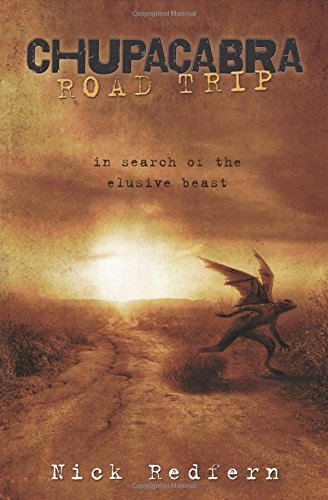
Book Review: Chupacabra Road Trip (Nick Redfern, 2015)

Almost a year ago, I received another book from my good friend Nick Redfern for review. The book in question is called Chupacabra Road Trip: In Search of the Elusive Beast (Llewellyn Publications, 2015). This book is all about Nick’s decade-long pursuit of the elusive vampire beast known as El Chupacabra, the Goatsucker. The beast first came to the attention of the general public in 1995 on the island of Puerto Rico, when an unknown predator slaughtered hundreds of animals, leaving the corpses completely drained of blood with savage bite wounds in their necks. This created mass hysteria of epic proportions that still continues to some extent today, which has since spread to Mexico, Texas, Florida, Russia, and even Australia. This book is a complete chronicle of Nick’s travels, interviews with eyewitnesses, strange experiences, and his personal thoughts and theories regarding the beast. For that reason, this review will be somewhat longer than the others.

The first eleven chapters of the book focus on the Chupacabra in Puerto Rico and Nick’s hunt for the monster there. He begins with recounting his 2004 adventure on the island, with his close friend Jonathan Downes and the crew of the SyFy Channel’s show, Proof Positive. The full story of Nick and Jon’s 2004 adventures can be found in Nick’s book Memoirs of a Monster Hunter (New Page Books, 2007). The first nine chapters detail Nick’s week-long expedition in July 2004, where he does a lot of driving around in a Jeep, interviewing eyewitnesses with some very compelling stories, trekking through damp caves and steaming jungles, drinking frozen margaritas (a favorite of mine as well, I must admit), hunting vampires, having some good-natured fun at the expense of his friend Jon, and he even manages to make it out of a deadly situation alive. During this time, Nick brings up the theory that the Chupacabra could be some kind of giant vampire bat, which is a fascinating possibility. Chapters ten and eleven focus on Nick’s 2005 return trip to the island, where he comes into contact with the occult, theories about wild dogs and killer monkeys, a stuffed toy duck named Admiral Zorgrot, more animal mutilations, an eyewitness account of a “huge, feathery beast”, stories of Men in Black, and tales of relict dinosaurs on the island. Needless to say, Nick has had his hands full, and we’re not even halfway through the book yet!

Chapters twelve through fifteen (as well as chapter sixteen in Part 3) are all about the Chupacabra and its bloody exploits in the United States and Mexico. The creature in the U.S. and Mexico takes the form of a hairless, bluish-gray dog with elongated fangs and claws, with longer hind legs than are typical for canines. Otherwise, this creature shares the same modus operandi as the Puerto Rican monster: killing livestock and draining their blood in the dead of the night. In these chapters, Nick investigates the beasts found in the towns of Elmendorf and Cuero (both in Texas), theories of mangy coyotes, the frozen severed head of the Chupacabra, and DNA testing. In Mexico, he finds stories of living pterosaurs, the 2008 DeWitt County Chupacabra (and the viral video that followed), Chupacabra skulls, strange photos, and shapeshifting tricksters. Some truly weird stuff happens in Texas and Mexico, that’s for sure.

Chapters sixteen through twenty covers the various conspiracies surrounding the Chupacabra. Conspiracy theories are one of Nick’s specialties, and he covers all of them. These range from underground labs, genetic experimentation, mutant monkeys, HIV and AIDS research, vampires in underground tunnels, more monkeys, vampires in Moca, primate research (and some disturbing similarities to the 2002 horror film, 28 Days Later), mango margaritas, and crashed UFOs, to American military and government interference, the Chupacabra in Russia and Australia, surviving thylacines, secret defense labs, and mysterious emails. He covers all of these in great detail, leaving no stone unturned. High strangeness, indeed.

Chapters twenty-one through twenty-four are all about vampires of a more conventional nature. Here, Nick talks more about the Moca Vampire, animal sacrifices, vampire attacks in Wales, the vampiric Aswang and its involvement in quelling a rebel uprising in the 1950s in the Philippines, another quest to Puerto Rico in search of an isolated village believed to be inhabited entirely by the Undead, and the dark side of the Palo Mayombe religion. Chapters twenty-five through twenty-eight deal with the various hoaxes and cases of mistaken identity that Nick has come across during his search for the Goatsucker. This includes one man’s pathetic attempt to pass off a captured possum with mange as the vampire beast, a mangy raccoon named Chupie, out-of-place big black cats, Nick’s brief skirmish with the San Juan Police Department, a Puerto Rican shapeshifter that could be both Bigfoot and the Chupacabra at the same time, and a hoax involving a photograph of an airplane that had allegedly crash-landed in the El Yunque rainforest. Hang on, folks: we’re almost done.

Chapters twenty-nine and thirty contain Nick’s final thoughts and theories regarding the elusive Chupacabra. For this, Nick turns to bad movies and cases of truth being stranger than fiction. He touches briefly on two awful SyFy original movies, respectively titled Chupacabra: Dark Seas (2005) and Chupacabra vs. the Alamo (2013). He also talks about goatsucker activity in the USSR, as well as a confusing attack wrongfully attributed to a werewolf. But it is in the final chapter that Nick makes his most compelling arguments. Here, he turns to our mutual friend and fellow monster hunter, Ken Gerhard. Ken has been investigating the Texas Chupacabra for years, and has developed some intriguing theories of his own. In the now-classic horror movie Prophecy (1979), animals mutate into grotesque monsters as a result of exposure to extremely high levels of mercury in the Androscoggin River and begin to kill people. Nick believes that this could very well be what happened with the Texas Chupacabra, although Ken doesn’t rule out other pollutants. In addition, Nick also discusses blood-drinking animals and how they relate to the beast’s feeding habits. You’ll have to read the book’s conclusion to find out what the truth could be.

Overall, Chupacabra Road Trip is a fantastic book. It’s well-written, informative, witty, funny, and highly entertaining. This is one of the best books on the elusive vampire beast out there, and I wholeheartedly recommend it to all of my friends and this blog’s followers. I would like to take this opportunity to give my sincerest thanks to Nick, who I am honored to call my friend and who was kind enough to send me this book for reviewing free of charge. Thank You, Nick!! I’m deeply looking forward to reviewing more of your books soon!

Friday, July 29, 2016

100TH ENTRY: The Alp

This is the first entry in my "Night Visitors" series, a series of blog entries that focus on monsters and entities that prey and feed upon humans while they sleep.

Nightmares have haunted the sleep of men and women since the beginning. These kinds of dreams can cause people to awaken very suddenly in the night, sometimes accompanied by screams of terror. In cultures all over the world, people have long believed that there are supernatural entities that are responsible for these horrifying dreams. In Germany and Austria, these beliefs have coalesced into a very frightening and very confusing entity that feeds upon the blood of unsuspecting women while they sleep. The German people know this vampiric spirit as the Alp, and it is one of the most dangerous of all supernatural predators.

Nobody seems to be quite sure as to what the Alp actually is, since the spirit is perceived differently in different areas. Generally speaking, the spirit is almost always male, although in some accounts it is portrayed as being female (Bane 10), and it is believed to have only one eye. In some areas of Germany, it is believed to be an elemental, much like a gnome or a tomtin. In parts of Austria, it is said to be a malicious spirit of the dead. Other people believed that the Alp could appear as a small elderly man, while others thought the spirit was a shapeshifting wizard of great power that would roam the countryside in the form of a bird or a cat (Curran 18). And that’s not all: some legends say that the Alp is the returned spirit of a man who died a horrible death, while others say that the entity is the vengeful ghost of a child that died before it could be baptized (Maberry 14). And still others say that it is a male child who died as a result of a particularly long and agonizing childbirth (Bane 10). Then again, the Alp could be a voracious bloodsucking demon from the deepest pits of Hell. To reiterate, nobody is really sure. And in that same vein, nobody seems to know exactly what the Alp looks like, either. This may be because the Alp is usually invisible, and because it is capable of assuming a number of different forms, and may thus have no true form (Bane 10). However, what is known of the Alp is that it is a predatory entity that feeds on the blood and the breast milk of sleeping women, glutting itself on those fluids while weakening the victim and depriving her baby of the food it needs to survive and grow at the same time (Maberry 14).

The Alp has a variety of supernatural powers at its disposal. When it takes on a physical form, the Alp possesses unnatural strength and speed, and is able to fly in any of its myriad forms (Bane 10). The Alp is a notorious shapeshifter, able to assume a wide variety of different forms. It can become any sort of animal that it wants, although the entity seems to prefer the form of a dog, a cat, a bird, a pig, a snake, a vole, a wolf, a moth, a white butterfly, a monstrous black dog with lecherous tendencies, and even an icy mist (Bane 10; Curran 18-19; Maberry 15). For this reason, the Alp is often linked to stories of werewolves in folklore, especially in Cologne, Germany (Bane 10). Interestingly, the Alp is always said to wear a hat called a tarnkappe, which literally means “cap of concealment”. This hat gives the spirit the power of invisibility and some other unspecified magical powers (Bane 10). This is usually a soft, old wide-brimmed hat, but it could also be a simple cap made of cloth or a veil, designed to hide the entity’s face from its victims (Curran 18). But the spirit becomes even more formidable when wielding the power of its Evil Eye, a sinister spiritual ability that is feared all over the world. The Evil Eye allows a person to curse or inflict misfortune and even death upon others with a glance or an intense stare. In the Alp’s case, the Evil Eye allows the spirit to manipulate the wills and especially the dreams of sleeping victims. With this power, the entity is capable of creating horrible nightmares that frighten its victims nearly to death and can also cause bouts of sleepwalking, seizures, and fits while they’re sleeping (Maberry 14; Curran 19). This, in turn, can lead to severe insomnia, and if this goes untreated for long enough, it will cause insanity and eventual death. The Alp must take great care to protect its eye from any kind of damage. Without it, the spirit cannot torment its victims with nightmares (Bunson 5).

The Alp is nocturnal by nature, detesting sunlight and only preying upon humans while they’re asleep. It feeds primarily on women, although on very rare occasions it will attack men and young boys (Bane 10; Maberry 14). The entity is able to attack in a few different ways, but all of them lead to the same outcome. The Alp’s primary method of attack is to sit on its victim’s chest, becoming heavier and heavier until it literally begins to crush its victim (“Alp (folklore)”, Wikipedia). The Alp may choose to turn into a cold mist and force itself down the victim’s throat (although it may also use its tongue or turn into a snake for this purpose). Either of these actions will compress the victim’s lungs, making it very difficult to breathe or scream for help. Once its victim is immobilized, the Alp begins sucking milk or blood from the nipples, sometimes taking both at the same time (Bane 10; Bunson 5). In other cases, the Alp appears in the victim’s dreams before it actually attacks, and then it drains the blood and the milk from the victim’s breasts. The Alp derives power from feeding in this way, but it also leaves the victim severely weakened and prone to disease, bouts of despair, and depression (Maberry 14). Furthermore, the Alp is known for sexually assaulting its prey before or during its feedings. In parts of Austria, it is believed that the spirit will literally pounce on women and young girls while they’re lying in bed, ravishing them as they sleep. It may also suck the semen from men and teenage boys (Curran 22). These attacks can not only give the victim nightmares, but it will also cause erotic dreams (Bane 10). Because of this and its penchant for feeding almost entirely on women, the Alp has been compared to the Incubus. Paradoxically, some women seem to actually enjoy having sex with the entity, and if a woman calls out to the spirit to take it on as a lover, the Alp will be gentle and chivalrous towards her. Some say that this gallant attitude extends to all of its victims, and that the Alp rarely forces itself upon its prey. Not everyone agrees with this, however. But in most cases, the victim will feel absolutely horrible about having had sex with this vile spirit. In any case, being attacked by the Alp in any way is known as Alpdrücke, meaning “elf pressure” (Curran 18; Bane 10; Bunson 5; Maberry 14).

Sometimes, the Alp isn’t content with only tormenting and feeding upon humans. If it so desires, the spirit will also attack livestock like cows, horses, rabbits, and geese. One of the Alp’s favorite activities is to ride a horse all night long, leaving the poor animal utterly exhausted and likely to die the next day. The entity may also feed upon the milk and the blood of livestock as well. One thing that the Alp is very fond of is literally crushing the animals to death with its sheer strength and weight (Bane 10; Franklin 12). The spirit is also known for mischief, and has been known to play with the hair of its victims by sucking on it and tying it into knots, which are known as “mare braids” (Franklin 12). It can also cause milk to go sour, pull out nose hairs, and is known for its tendency to put already-soiled diapers back on babies. The mother must make the Sign of the Cross over the diaper before putting on a clean one to prevent this (“Alp (folklore)”, Wikipedia).

There are a number of different ways in which a person may become an Alp. Some of them have already been mentioned, but they will be repeated here for the sake of convenience. There are some who say that the Alp is the ghost of man who died horribly as a result of being murdered or having committed suicide, while others say that it is the vengeful spirit of a baby boy who died before his baptism (Maberry 14). In that same vein, some beliefs hold that a child born with a caul (a thin piece of amniotic membrane) over their face could be predisposed to vampirism or lycanthropy of one form or another, while other cultures believed that being born with a caul was extremely lucky and that such a person could never die from drowning. If the baby was born with hairy palms, then the child was bound to become either a vampire or a werewolf at some point in his life (Curran 18-19). If a man somehow becomes an Alp during his lifetime, then it is always considered to be his mother’s fault. If the man’s mother had sinned during her pregnancy and hadn’t sought forgiveness, then her child’s transformation into a vampire was inevitable. If the woman ate something that was considered to be unclean or had been spat on by malicious dwarves (dwarves are common in German folklore), then her son was certain to become a monster. Women are thought to be particularly vulnerable during pregnancy to supernatural attack, and childbirth was fraught with peril as well. If the mother-to-be took any “inappropriate measures” during her baby’s birth, then her son could become an Alp as a result (although exactly what those “measures” are remains unspecified). If she were to bite down on a horse’s collar to ease her pain during childbirth, it could result in vampirism. If the mother was frightened by an animal (especially a horse or a dog) during her pregnancy, her child is destined to become an Alp (Curran 18-19; Bunson 4; “Alp (folklore)”, Wikipedia). If the child died after its mother suffered through a particularly long and agonizing childbirth, then the baby may return as an Alp (Bane 10). If any of these particular conditions come to pass, then that man is doomed in life or death to an awful, godforsaken existence as a shapeshifting, blood-drinking spirit.

Most of the monsters that are spoken of in folklore from around the world can be killed or otherwise destroyed by specific methods. This is not the case with the Alp. This particular entity is virtually impossible to destroy by any known means, and weapons are useless against it. However, people have devised a number of different methods down through the centuries to deter or otherwise keep the spirit away. But be warned: this list is long and can be somewhat complicated or even strange, but it is necessary if a person wants any chance of surviving an encounter with this vampiric spirit. Be courageous, and follow the instructions.

One of the most effective means of ridding oneself of the Alp’s attentions is to simply steal its tarnkappe. However, this method is fraught with danger, and should only be considered as a last resort. This can be done by seeking out the spirit’s resting place during the day and stealing it. Either that, or one may knock it off during an attack (if one can muster the strength to move). It is said that the hat is always visible, whether the Alp is or not, which makes things a bit easier (“Alp (folklore)”, Wikipedia). In other words, if a person sees a floating, disembodied hat or a cap, then it's bound to be an Alp. The tarnkappe is precious to the Alp, and the spirit is very protective of it. Without its tarnkappe, the Alp loses much of its power, not to mention its powers of strength and invisibility. This hat is so valuable to the Alp that the spirit will generously reward anyone that returns the hat (Bane 10; Bunson 5; Maberry 14). Once sufficiently weakened, the entity can then be driven off with prayers or incantations (Maberry 14). The Lord’s Prayer, Psalm 91, Psalm 23, Psalm 25, Psalm 61, and Psalm 121 are all recommended.

There is a wide variety of methods that can be used to keep the Alp from entering one’s home and attacking the occupants. Some people say that iron will keep the spirit at bay (Franklin 12). In a similar vein, it is said that a pair of scissors, placed under the pillow with the points aligned towards the front end of the bed, will also work (Maberry 15). One of the stranger methods of repelling the Alp is for a woman to go to sleep with her shoes at the bedside, with the toes pointed towards the bedroom door. This method, along with the scissors-under-the-pillow bit, is thought to confuse the Alp for some reason, and will force the entity to turn towards the door and leave (Maberry 15). Oddly enough, some sources recommend that if a person finds the Alp sitting on their chest (it will most likely be invisible), they should put one of their thumbs into the palm of the other hand. For some reason, this is thought to frighten the spirit and will cause it to flee immediately (Bane 10-11). And to prevent the Alp from attacking one’s cattle and horses, a pair of crossed measuring sticks should be placed in the barn or a broom should be placed in the animals’ pen to protect the livestock from being ridden to death (Bane 10). One may also hang iron horseshoes from the bedpost. Since the Alp is capable of shapeshifting, it is recommended that any holes (especially keyholes) be plugged up. Doing this before going to bed will keep the Alp out of the room, while doing so during a visitation will trap the spirit inside the room. Doing so will undoubtedly make the spirit angry, as it is said that the Alp can only leave the way it originally came into the room. Keeping a light on all night (whether a candle or a nightlight) is considered to be effective, as is a person standing guard over the would-be victim all night (“Alp (folklore)”, Wikipedia).

One of the more complicated methods for keeping one of these malevolent night visitors away (there’s more than one) is to bargain with it or to promise it something. If a person finds a small, pale-white butterfly sitting on their chest after awakening in the middle of the night, he or she must say, “Trud, come tomorrow and I will lend you something!” The bug will immediately buzz off, but it will come back the next day in the form of a human with bushy eyebrows that meet in the middle above the nose, wanting to borrow something (i.e. a cup of flour, milk, or sugar, like most annoying neighbors). At this point, one has to say, “Come back tomorrow and drink with me.” The Alp will leave, but on the next day, the witch who sent the spirit to harass the household will be compelled to show up at the front door, but this may only apply if it was witchcraft or dark magic that summoned the Alp to begin with. At this point, the would-be victim has the witch at their mercy, and may confront or otherwise deal with the witch as they see fit, although outright murder in public isn’t recommended (Bane 10; “Alp (folklore)”, Wikipedia).

There are a number of other ways to ward off the Alp. In his book Vampires (New Page Books, 2005), Dr. Bob Curran suggests that, in some parts of Austria, flashing a crucifix, the sight of a holy relic, and wearing holy medals or a scapular will drive the spirit off. Protestants in other parts of Germany disagreed, saying that it sounded way too Catholic and reeked of superstition to boot. Furthermore, the Protestants argued that these spirits predated Christianity, saying that they had once been the servants of very old deities that had once dwelled deep within the ancient forests and high in the lonely mountains. In other words, the Alp and its kind aren’t likely to be affected by the power of the Church. However, Dr. Curran does recommend sprinkling salt across the front doorstep (and perhaps on all of the windowsills in the house), which will keep the Alp out (Curran 21). A line of salt (which must be free of impurities) in front of a room's door may also work, but only as long as the line remains unbroken.

It should be known that, like some other vampire species, the Alp suffers from arithmomania – an obsessive-compulsive desire to count. This spirit’s case of supernatural OCD can be turned into a great advantage by taking a large bag of seed to the nearest crossroads. Once there, a small pile should be poured in the direct center of the crossroads. And since the crossroads goes off in four different directions, one must also pour a small trail of the seed from the larger pile in the middle of the crossroads along the center of each of the four roads. Once the Alp comes along, it will see the seed and feel an irresistible urge to start counting. And because the seed trails branch off in four different directions, the Alp will become completely and utterly confused! The Alp will just sit there on the crossroads, crying in utter frustration until dawn comes. At this point, the Alp must flee and quickly find a resting place for the day. Sunlight weakens the power of the Alp’s tarnkappe, negating its invisibility and reducing its strength (Maberry 15). The Alp must find a place to hide and quickly, or the spirit risks being exposed to human eyes. The Alp doesn’t like to be seen, and seeing one of these spirits in this state is akin to a death sentence.

Some ways of warding off the Alp involve the use of magic, and it must be very potent magic indeed. One prescribed method is to draw a mystic hexagram on the front door of the house or one’s bedroom door with a piece of chalk. Afterwards, the hexagram must be imbued with the names of the Three Magi Melchior, Caspar, and Balthasar, the Three Kings who brought gifts of gold, frankincense, and myrrh to baby Jesus after His birth. In addition, all of this must be done during the Festival of the Three Kings (which falls on Epiphany, on the twelfth day of Christmas). Another such charm says that one must draw a pentagram (again, with chalk) on a door with the names of Elias and Enoch inside of it. Furthermore, this must be done by the head of the household (Bane 11).

In addition to the methods described above, people have invented some truly strange and questionable ways of defending themselves against the Alp. Once upon a time, there was a song that could be used to frighten the spirit away. This melody would be sung by the fire every night before the last person in the house went to sleep. However, the lyrics and even the song’s name have been lost to the passage of time and the depths of history. Another recommended remedy is to sleep with a mirror on one’s chest. One particularly morbid (not to mention disturbing) method is to bury a stillborn child under one’s front door. But the most bizarre way to ward off one of these spirits by far is to use one’s own urine. A person that is suffering from nightmares brought on by the Alp’s attacks should pee into a clean, brand-new glass bottle and then hang the bottle from a tree or another convenient spot for three whole days. On the fourth day, the bottle should be taken down and, without uttering a single word at all, carried to a running stream or a creek and tossed overhead into the flowing water (Bane 11). Easy, unless one is given to arbitrarily talking to himself aloud for no reason.

One thing that the Alp truly hates is lemons. Exactly why this might be isn’t certain, but this fruit’s apotropaic properties seem to only be effective against some of Germany’s indigenous vampire species. On very rare occasions, the Alp can be caught while it is sleeping during the daytime, or even more rarely, cornered by armed monster hunters. In such situations, a brave individual can (very carefully) try to force the entity’s mouth open and fill it with lemon slices. This undertaking is extremely dangerous and, if done incorrectly, could have deadly consequences. But if the hunters succeed, it will be well worth the risk. The lemons won’t kill the entity, but it will become so weak that the Alp won’t be able to start hunting and feed itself again for several months, perhaps even years. But be warned: the Alp will eventually return, ravenous with hunger and starving for revenge. It will relentlessly stalk and kill those who so thoroughly defeated and humiliated it, and it will most likely seek out their families as well (Maberry 15). Blood will flow like rivers, and nothing short of intervention from God Himself will stop it. In other words, be afraid…be very afraid.

Under certain circumstances, it may be possible to destroy the Alp or, at the very least, permanently destroy its powers. But keep in mind that these measures are dependent upon the Alp’s origins, and that while these tactics may work on one spirit, it may not be useful on another. If a community believed that the Alp was the ghost of someone who had recently died, then what followed was more or less a typical vampire hunt. The deceased’s grave would be dug up, the corpse removed, and then the body was burned in full view of the public until nothing but ashes and cinders remained. Presumably, the ashes would then be scattered or poured back into the person’s grave. In some instances, the Alp could be a living person who might not necessarily be aware of their nighttime activities. If this was the case, then they had to be found and restrained before the next attack could occur. Once this was done, a cut was made just above the person’s right eye. Drawing the person’s blood in this way is believed to take the Alp’s dark powers away, rendering the individual harmless. This practice is known as “blooding”. In the same vein (pun intended), the same thing could be done to a witch who had summoned the Alp. Whether this could actually destroy the entity or not is unknown, but it would most definitely rid the Alp of its powers (Curran 21; “Alp (folklore)”, Wikipedia). But other than what is mentioned above, it is virtually impossible to destroy the Alp.

As recently as the eighteenth and the nineteenth centuries, panics have arisen due to attacks by the Alp. In parts of Austria, between the years of 1725 and 1732, graveyards were desecrated by frightened locals hunting for vampires. Some blamed a tuberculosis epidemic, but that didn’t stop the people from unearthing bodies and burning them. In 1755, people living in the town of Olmutz experienced the same troubles. In 1790, an Alp appeared in the town of Cologne, Germany, taking the form of “a massive and lascivious dog” with pitch-black fur, glowing red eyes, and sparks that dripped from the corners of its mouth. This creature terrorized the townsfolk, until a certain corpse was disinterred from the local cemetery and burned to ashes. After that, the beast was never seen again. And finally, in the early 1800s, a number of these vile spirits were said to be roaming about the Brocken Mountains in Germany. Here, the entities were sucking blood from the nipples of men as they slept, supposedly under the direction of witches. Livestock like sheep and cows were also attacked, but there are no records of how these incidents were dealt with (Curran 21-22).

Today, the legends and the lore surrounding the Alp have been all but forgotten. Science has explained these attacks as sleep paralysis, hypnogogia, vivid nightmares, and in some extreme cases, SUNDS (Sudden Unexplained Nocturnal Death Syndrome). According to author Jonathan Maberry, the Alp was once one of the most common and the most feared of all the unnatural predators in Europe (Maberry 14). Now, it is thought to be only a myth, a superstition from a bygone age. But is there something truly evil behind these legends? History and folklore would seem to indicate as much. And while attacks from this evil spirit seem to be few and far between in modern times, it doesn’t necessarily mean that there isn’t something out there. And who knows? In Europe's more rural areas, the Alp might still be active, flying about invisibly in the darkness of the night, always searching for its next meal of warm human blood…

Acknowledgements

I would like to take this time to thank my good friends Bob Curran, Jonathan Maberry, and Theresa Bane for allowing me to use their books in my research. Without their help, this would've been a very short 100th entry. Thank you!!

Sources

Bane, Theresa. Actual Factual Dracula: A Compendium of Vampires. Randleman, North Carolina: NeDeo Press, 2007.

Bunson, Matthew. The Vampire Encyclopedia. New York: Gramercy Books, 2000.

Curran, Dr. Bob. Vampires: A Field Guide to the Creatures that Stalk the Night. Franklin Lakes, New Jersey: New Page Books, 2005.

Franklin, Anna. The Illustrated Encyclopaedia of Fairies. London, England: Anova Books Company Ltd, 2004.

Maberry, Jonathan. Vampire Universe: The Dark World of Supernatural Beings That Haunt Us, Hunt Us, and Hunger for Us. New York: Citadel Press Books, 2006.

“Alp (folklore)”. Wikipedia, the Free Encyclopedia. July 6, 2016. Accessed on July 26, 2016. <https://en.wikipedia.org/wiki/Alp_(folklore)>

Monday, July 25, 2016

Book Review: Encyclopedia of Spirits and Ghosts in World Mythology (Theresa Bane, 2016)

A few months ago, I received a book from McFarland & Company, Inc. for review, courtesy of the book’s author and my good friend, Theresa Bane. Theresa and I have been corresponding for a few years now, and she is an absolute delight to speak to and interact with. In addition, Theresa is a renowned vampirologist and an expert on the Undead. She has written two books about vampires and a number of others about demons, giants, faeries, monsters, haunted places, folklore, and ghosts. It is the last one that the book in question covers, and it is entitled Encyclopedia of Ghosts and Spirits in World Mythology (McFarland & Company, 2016).

Like most of Theresa’s books, the encyclopedia is an academic work, and every type of ghost and spirit gets an entry of its own in an A-Z format. Theresa’s research is painstakingly thorough, and the bibliography is one of the longest and the most extensive that I’ve ever seen. Some of the book’s entries are long and very detailed, while others consist of only a single sentence and only give a brief description. However, most of the entries fall somewhere in between the two. And after each entry, Theresa gives her sources. And for a book of only 169 pages, that’s a lot of information!

As for the book’s entries, they contain information on every conceivable type of ghost and spirit, including appearance, habits, powers, what part of the world they’re found in, how to protect oneself and, in some instances, how to destroy them. This book contains a number of different spirit types, including spirits of the dead (ghosts), nature spirits, faeries, yōkai, demonic spirits, household spirits, elementals, ancestral spirits, vampiric spirits, genii loci (spirits attached to a place), guardian spirits, monsters, different types of djinn, and a great deal more. The entries feature all kinds of entities, from the Banshee (and all variations thereof) to the Ghoul, from the Acheri to the Grey Lady, and a host of others in alphabetical order, from the Aatxe to the Zuzeca. And since this book deals with ghosts and spirits that are found in cultures all over the world, you won’t find any information pertaining to haunted places of any kind. There are literally thousands of books on that subject available for your perusal.

Overall, Theresa’s book is well-written, neatly organized, free of flaws, and a veritable treasure trove of information. Her research is incredibly thorough and detailed, with an index for quickly locating specific entries and an extensive bibliography for further reading and research. Whether you’re a serious researcher or just curious, this book is an incredible read. I am truly thankful that McFarland & Company and Theresa have given me the opportunity to review this title, and I hope to review more of their titles in the near future. I heartily recommend this title to all of my friends.

Publisher: McFarland – www.mcfarlandpub.com – 800-253-2187 (Order Line)

Monday, July 11, 2016

Book Review: Goatman: Flesh or Folklore? (J. Nathan Couch, 2014)

Who hasn't heard of the Goatman? According to legend, the Goatman is a half-man, half-goat monstrosity that has a man's body and the head of a goat. It stands over seven feet tall and walks on two legs like a man, and its muscular body is covered in course hair. The beast is sometimes said to have red glowing eyes, and hooves in the place of feet. The monster is frequently said to carry a woodcutter’s axe, which it uses to slaughter its victims (which are most often horny teenagers). But is the legend true?

In his book Goatman: Flesh or Folklore?, (CreateSpace, 2014), writer and paranormal investigator J. Nathan Couch investigates a wide variety of Goatman legends and sightings. He takes his time analyzing and discussing them, making references to classical Greek mythology, comic books, urban legends, news articles, television shows, books containing relevant material (and there are quite a few), horror films, and Internet blogs. In short, the man’s research and his diligence are nothing short of incredible! His investigation covers the entire country, from the Maryland Goatman to the Lake Worth Monster, the Pope Lick Monster to the Beast of Billiwhack, and the Sheepman to the now-notorious Sheepsquatch. Not only that, but Nathan also tackles legends of lesser-known monsters, unsolved murders, and a few non-Goatman legends as well. He even discusses satyrs from ancient Greek mythology in-depth! And he doesn’t shy away from the gory and juicy details, either. To make a long story short, this book will tell you everything that you could possibly want to know about the Goatman!

As great as this book is, there are some flaws. There are some spelling and grammar errors, but they are few and far between. And given the sheer volume of information within this book, it’s to be expected. And such errors do not detract from this book’s value as the first work of its kind, not in the slightest. Nathan traveled all over the United States for two years, digging up hard-to-find and obscure materials for his research, and writing all the while, sparing no details in his pursuit of the truth. And he was kind enough to send me a copy, free of charge, to read and review for myself. Friends like this are hard to find, and I am eternally grateful for his generosity.

All in all, Goatman: Flesh or Folklore? Is a fantastic book, and one that I highly recommend to this blog’s readers. It is both witty and intelligent in its treatment of the Goatman legend. This book is the first to ever fully explore the various legends associated with the Goatman, and it does a remarkable job of it. I honestly cannot recommend it more!